
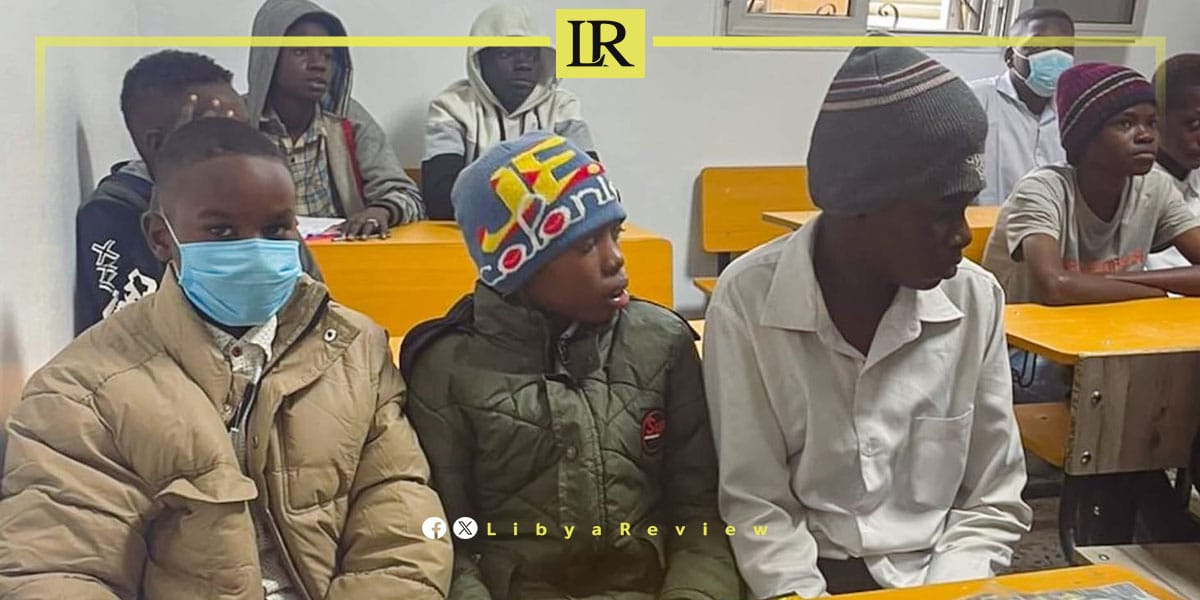
The Libyan Parliament-designate government has launched a humanitarian initiative to support the educational process in schools serving the Sudanese community, as part of broader efforts to assist migrant and refugee communities across the country.
According to a statement from the Ministry of Foreign Affairs and International Cooperation in the eastern-based government, the initiative was implemented in the city of Jalu following directives from Foreign Minister Abdelhadi Al-Hwaij. The move reflects the ministry’s continued monitoring of the conditions of community and foreign schools operating in Libya, with a particular focus on supporting Sudanese students affected by the ongoing conflict in their home country.
The initiative included the provision and distribution of essential classroom supplies, school tools and fully equipped backpacks for students. It also covered the delivery of desks and other basic school furniture aimed at improving the learning environment and enabling students to continue their education under more suitable conditions.
The programme was carried out in cooperation with the Norwegian Refugee Council, highlighting Libya’s engagement with international partners to deliver humanitarian and development-focused assistance. Officials said the partnership helped ensure that support reached schools efficiently and responded directly to their most urgent needs.
Oversight and implementation of the initiative were supervised by Abdulstar Ramadan Al-Mubarki from the Ministry’s Department of Arab Affairs, alongside Abdeljalil Ahmed Mustafa, a member of the National Committee for Community and Foreign Schools. Both officials coordinated with local stakeholders to assess requirements and monitor distribution.
The Ministry of Foreign Affairs said the initiative forms part of its wider commitment to supporting education for children of resident communities in Libya, while strengthening cooperation with international organisations involved in humanitarian action.
Libya hosts thousands of Sudanese nationals who have fled violence since the outbreak of war in Sudan. Education has emerged as a critical challenge for displaced families, making targeted support to community schools an increasingly important component of Libya’s humanitarian response.

