
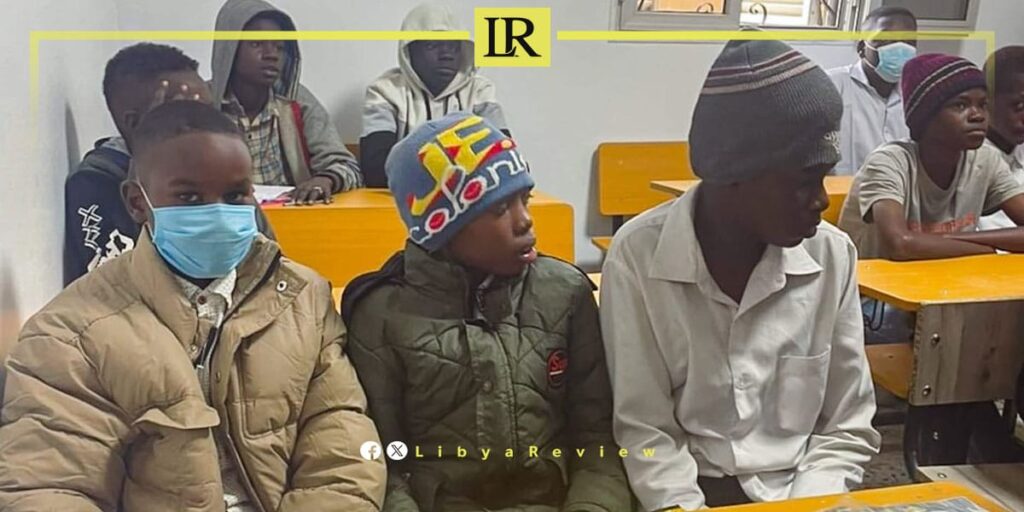
Libya’s government has decided to exempt Sudanese students from the requirement to obtain residency permits in order to enrol in Libyan schools for the 2025–2026 academic year, according to an announcement by the Sudanese Embassy in Tripoli.
In a statement published on its official Facebook page, the embassy informed Sudanese nationals across Libya that the Libyan authorities had approved the exemption, allowing Sudanese students to continue their education without facing administrative barriers linked to residency documentation.
The embassy expressed its appreciation to the Libyan government for what it described as “noble and appreciated positions” towards Sudanese citizens who have been forced to seek refuge in Libya due to the ongoing conflict in Sudan.
It noted that the decision reflects Libya’s continued humanitarian consideration of the difficult circumstances facing Sudanese families displaced by war.
The announcement follows recent directives issued by Libya’s Ministry of Education, which instructed educational institutions to refrain from enrolling foreign students unless they held valid residency permits.
These measures prompted concerns among Sudanese families regarding their children’s access to schooling.
In response, Sudanese diplomatic officials engaged with Libyan authorities to seek a practical solution.
Libya’s Ministry of Education held discussions in recent months with Sudan’s Deputy Ambassador to Libya, Nasreddine Abdullah, and Consul Sadiq Abdelbagi. The talks focused on regulating the enrolment of Sudanese students in line with Libyan laws while taking into account humanitarian considerations.
The exemption is expected to ease pressure on Sudanese families residing in Libya, many of whom fled violence and instability in their home country. It also ensures educational continuity for thousands of Sudanese children during the upcoming school year.
Libya has hosted a significant number of Sudanese nationals since the outbreak of war in Sudan, with education and access to basic services remaining among the most pressing challenges facing displaced families.

