
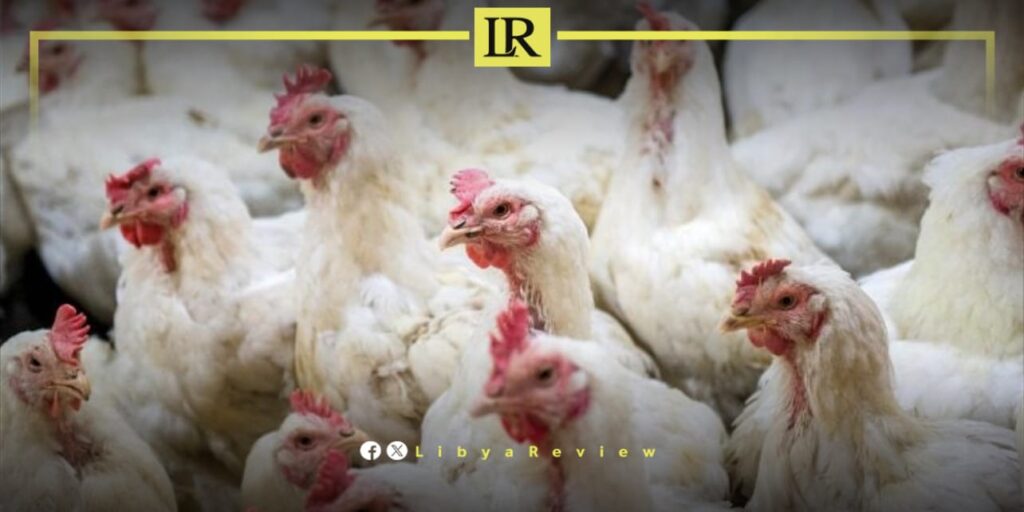
Libya is witnessing a renewed outbreak of Newcastle disease affecting domestic poultry, raising concerns over biosecurity gaps and the economic impact on farmers, particularly in coastal areas and the Green Mountain region.
The viral disease, which spreads rapidly among birds, has led to increased reports of poultry deaths and declining production, at a time when vaccination coverage remains inconsistent.
Early signs of the outbreak emerged in recent weeks, with suspected cases reported in Benghazi, Al Marj, Al Bayda, Shahat and Derna, reflecting a pattern of spread across interconnected poultry-producing zones. Veterinary laboratories have confirmed positive samples, despite operating under pressure due to limited diagnostic supplies and growing sample volumes.
Newcastle disease is highly contagious among poultry and causes severe losses through high mortality rates, reduced growth and a sharp decline in egg production. While it poses no serious risk to humans, it can cause mild eye irritation among farm workers, underscoring the need for protective measures.
Amid public concern, the head of the National Centre for Animal Health, Abdulrahman Jbeil, sought to reassure citizens that the epidemiological situation remains “relatively stable”, particularly in the Green Mountain area.
Speaking to Libya Al-Ahrar TV, Jbeil said the centre is monitoring developments through animal health offices and receiving field reports on a continuous basis.
He explained that only one affected poultry farm had complied with vaccination requirements, while most infected farms had failed to implement approved immunisation programmes, stressing that breeders bear responsibility when vaccination protocols are ignored.
Jbeil noted that Newcastle disease is not zoonotic but carries a high economic cost, making prevention essential. He confirmed that no new outbreak clusters have been officially recorded so far.
He added that the centre, operating under the Ministry of Agriculture in Tripoli, is fully prepared to deploy field teams, provide disinfectants and technical support, and utilise fully equipped laboratories. Preparations are also in place to set up laboratories in eastern Libya if access allows.
Experts warn that sustained containment will require stricter biosecurity, reliable vaccine supplies and coordinated action to protect Libya’s poultry sector and food security.

