
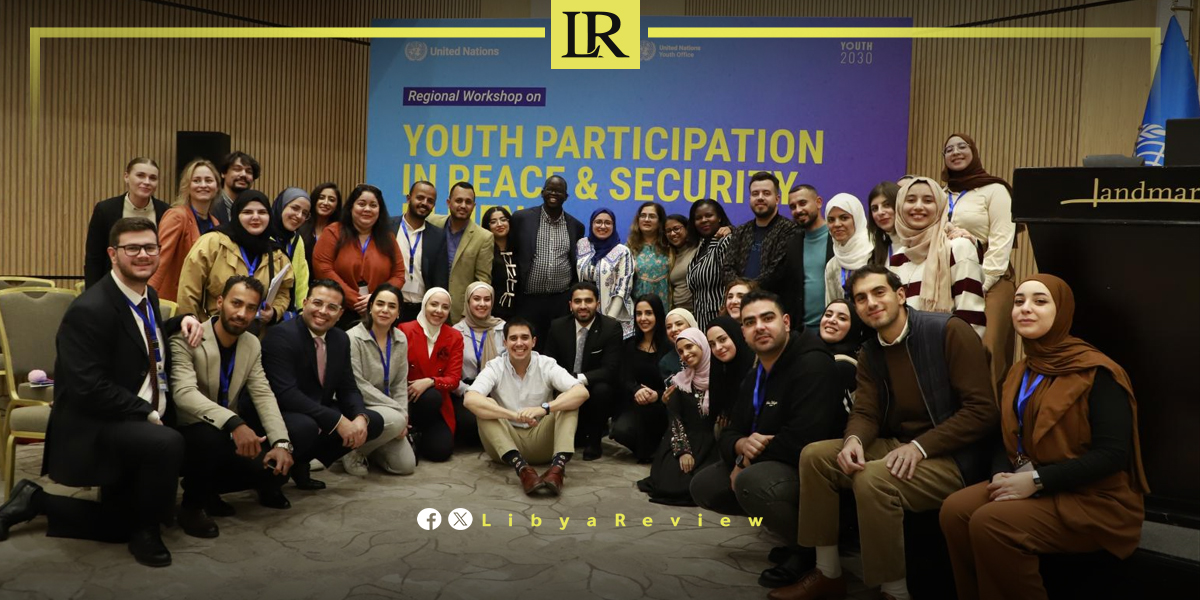
Libyan youth are increasingly asserting their role in shaping peace and security efforts, as young peacebuilders from Libya participated in a major regional workshop aimed at strengthening the implementation of the United Nations’ Youth, Peace, and Security agenda across the Middle East and North Africa.
Three Libyan youth-led civil society organisations joined the regional Youth, Peace and Security workshop held in Amman, Jordan, in December 2025, alongside representatives from the United Nations Support Mission in Libya and the United Nations Population Fund.
The event, organized by the UN Youth Office, brought together over 70 young peacebuilders from across the region to assess progress, identify challenges, and define priorities for the upcoming decade.
The workshop marked ten years since the adoption of UN Security Council Resolution 2250, which formally recognized the vital role of young people in peacebuilding and conflict prevention. Participants reviewed achievements made since the resolution’s adoption while acknowledging that, in many countries including Libya, a gap remains between policy commitments and practical implementation.
Libyan participants highlighted that political fragmentation, weak institutions, and limited access to decision-making spaces continue to constrain meaningful youth participation. While young people are often consulted, they stressed that their contributions are rarely translated into sustained policies or nationally anchored processes.
Participants called for structured dialogue with authorities and long-term mechanisms that allow youth initiatives to influence governance, peacebuilding, and development strategies.
The discussions also emphasized the importance of creating safe and inclusive spaces for youth engagement, particularly at the local level where young people are most affected by insecurity, economic hardship, and service gaps.
Concerns were raised about intimidation, online harassment, and social pressures that discourage youth participation, challenges that disproportionately affect young women.
Mental health and psychosocial well-being emerged as key priorities, with participants noting that prolonged conflict, displacement, unemployment, and climate-related pressures have taken a cumulative toll on young people. Addressing these challenges, they argued, is essential for building resilient communities and ensuring that youth participation is meaningful rather than symbolic.
The workshop concluded with calls to strengthen national Youth, Peace and Security coordination mechanisms, expand youth-led peace initiatives, and build stronger regional partnerships.
UN officials stressed that regional platforms such as the Amman workshop help equip Libyan youth with networks, experience, and momentum, reinforcing their role as active contributors to peace and stability in Libya.

