
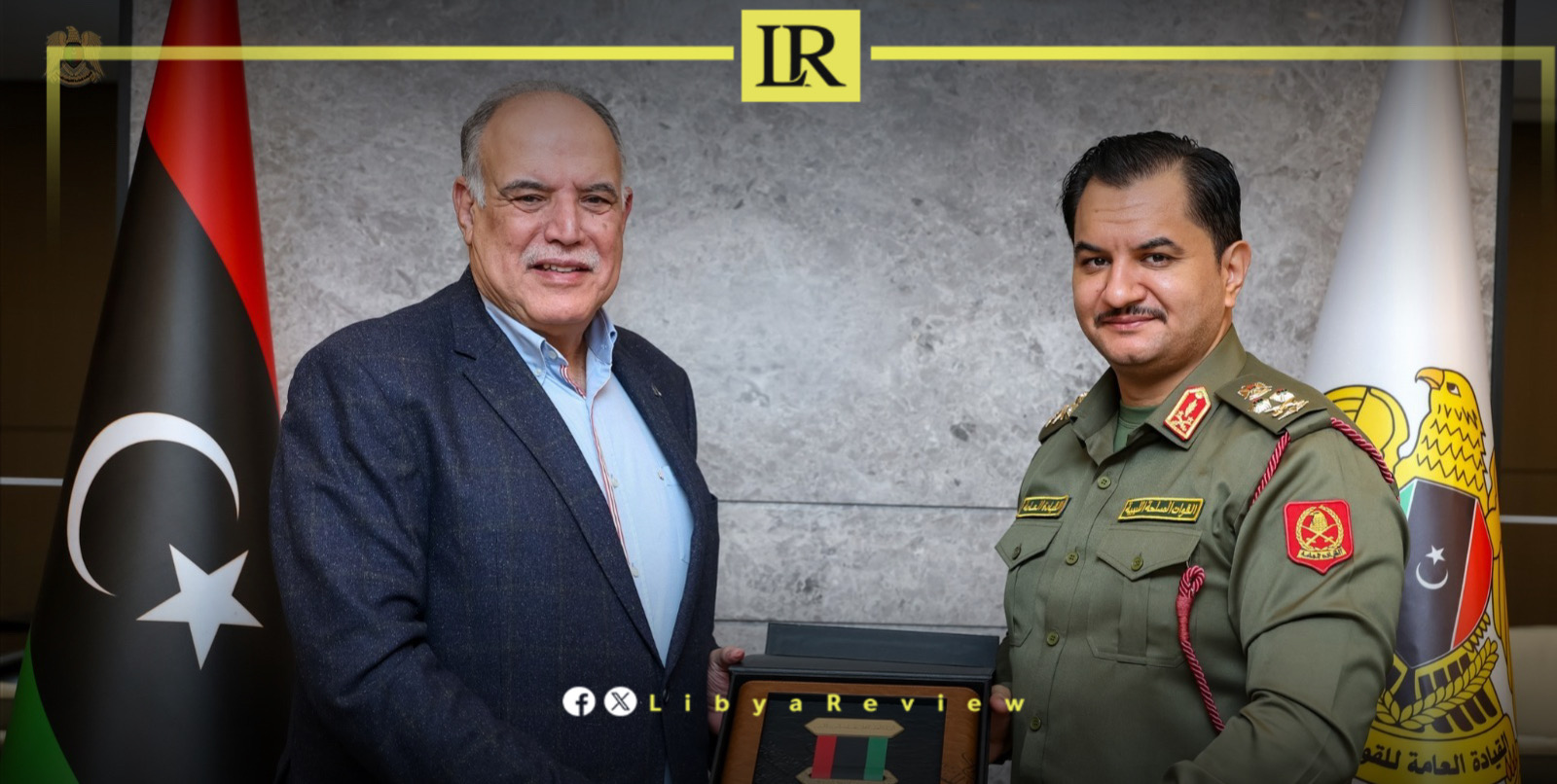
Lieutenant General Saddam Khalifa Haftar, Deputy Commander-in-Chief of the Libyan National Army, held talks in Benghazi with Ibrahim Abushnaf, head of the National Committee for Monitoring the Conditions of Prisoners and Detention Facilities, to review the committee’s ongoing work and assess progress in overseeing prisons and detention centers across Libya.
The meeting, hosted at the General Command headquarters, focused on the committee’s mandate and operational mechanisms, particularly its role in monitoring detention conditions, reviewing the legal status of detainees, and ensuring compliance with judicial procedures and rulings.
Discussions covered the committee’s field inspections, documentation processes, and coordination with judicial and security institutions to address violations and administrative shortcomings.
Special attention was given to the enforcement of court decisions, including acquittals and release orders issued by civil and military courts. The meeting reviewed measures taken to ensure that such rulings are implemented without delay and examined cases where enforcement has been hindered by procedural or institutional obstacles. The committee also outlined its efforts to identify unlawful detention practices and to submit urgent recommendations aimed at correcting violations and strengthening legal safeguards.
Saddam Haftar stressed the importance of upholding the rule of law and protecting the legal rights of detainees, emphasizing that effective oversight of detention facilities is essential for reinforcing public confidence in state institutions. He underlined the need for continued coordination among military, judicial, and oversight bodies to prevent abuses and ensure that detention practices align with national laws and established legal standards.
For his part, Ibrahim Abushnaf provided an overview of the committee’s activities since its formation, highlighting initial findings and outlining plans for expanded inspections and follow-up mechanisms. He reaffirmed the committee’s commitment to transparency, accountability, and institutional reform, noting that improving detention conditions and enforcing judicial rulings are central to advancing justice and human rights.

