
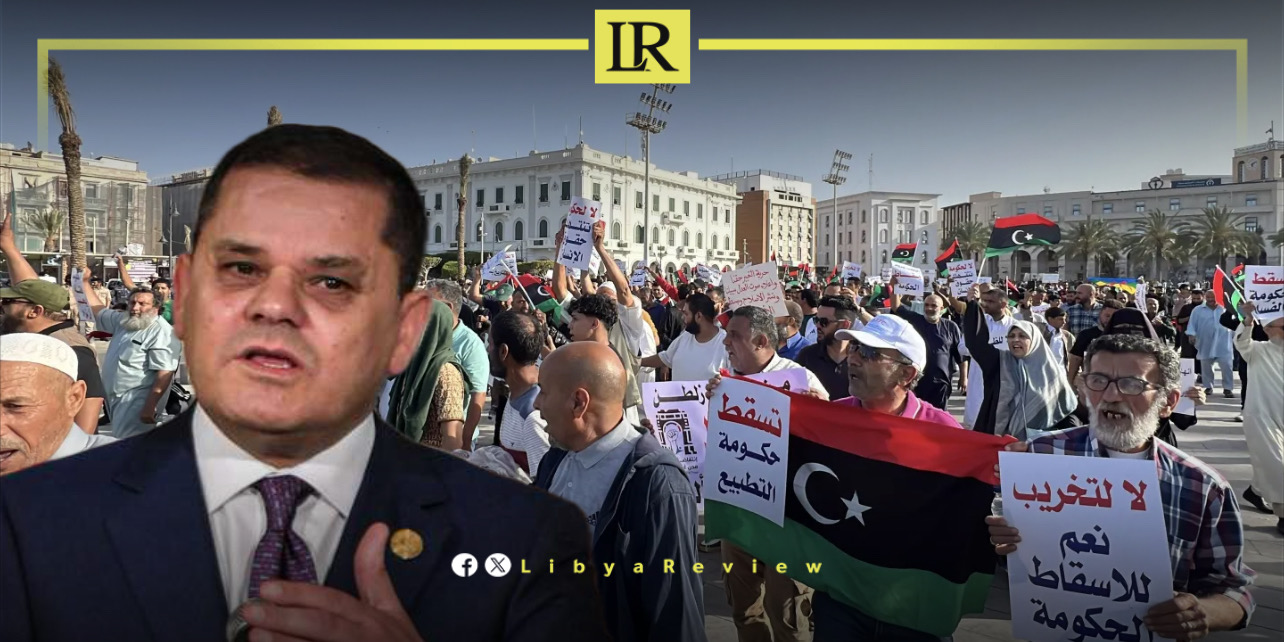
Tripoli has seen more than a week of sustained demonstrations calling for the removal of the Government of National Unity led by Abdel-Hamid Dbaiba, reflecting a shift in public sentiment that is no longer episodic or limited to economic grievances. What began as localized expressions of frustration has evolved into a broader challenge to the legitimacy of the current political order, including both domestic authorities and international mediation efforts.
The persistence of protests, and their expansion beyond the capital to cities such as Misrata and Zawiya, points to a deeper crisis than service delivery failures alone. Protesters are increasingly framing their demands around political accountability, holding the executive authority responsible for extending the transitional period without a clear timeline for elections. For many Libyans, the repeated postponement of national polls since December 2021 has become the central symbol of a broken political process.
Initially, the Government of National Unity was viewed as a bridge toward reunification and elections. Over time, however, confidence in its capacity—or willingness—to fulfill that mandate has steadily eroded. The result has been growing public skepticism, now expressed openly through street mobilization and calls for the government’s departure. These protests suggest that the government’s narrative of stability and continuity no longer resonates with significant segments of the population.
Demonstrations outside the headquarters of the United Nations mission in Janzour have added an additional political dimension, signaling declining trust in international mediation. Many protesters argue that successive UN-led initiatives have managed Libya’s crisis rather than resolved it, contributing to an open-ended transition that has benefited political elites while leaving ordinary citizens excluded from meaningful political choice.
The emergence of protests in Misrata is particularly significant given the city’s political and social influence in western Libya. Their spread into such centers indicates that anger is no longer confined to peripheral areas and undermines efforts to portray the movement as marginal or easily contained. Analysts view this as evidence of widespread fatigue with unelected institutions that continue to govern without renewed mandates.
While these demonstrations may not immediately bring down the government—given its control over executive institutions and financial resources—their continuation narrows its room for maneuver. Sustained pressure across multiple cities increases the political cost of inaction and reduces the effectiveness of short-term containment measures.

