
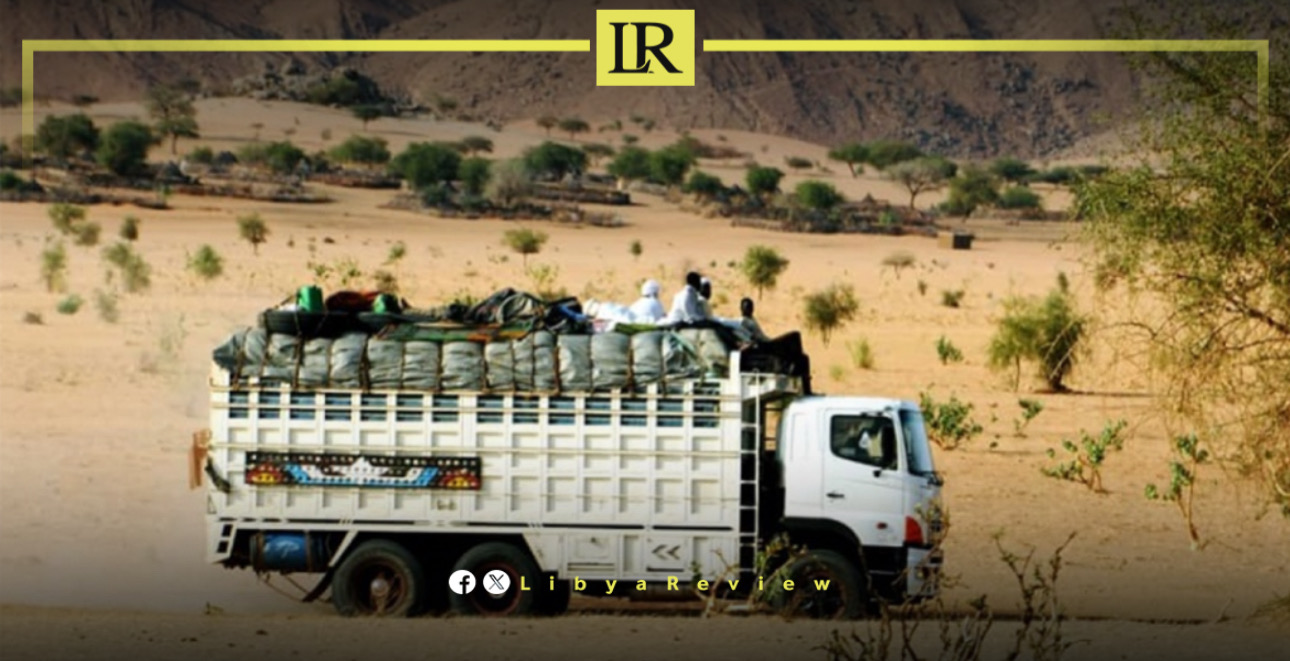
Commercial activity has resumed along the desert trade route linking Libya and Sudan through the tri-border area shared with Egypt, signaling a revival of cross-border trade after a prolonged slowdown.
According to Sudanese outlet Darfur24, dozens of traders are now traveling weekly toward southeastern Libya, using the reopened corridor to transport goods and fuel to markets in both countries.
The report indicates that small commercial vehicles are once again moving supplies from Sudan toward the Libyan city of Kufra, which has long served as a major logistical hub connecting North Africa with the Sahel.
Traders transport goods along the Kufra–Rabiana route before crossing into Sudan from the eastern side of the border triangle. From there, convoys continue toward the town of Al-Malha in North Darfur, with journeys lasting more than four days due to harsh terrain and long desert distances.
Some traders are also using alternative desert paths, traveling through remote areas toward the Sudanese city of Mellit. These routes, while longer and more demanding, allow continued movement of goods where formal infrastructure remains limited. Such journeys can take up to six days, depending on weather conditions and security developments along the way.
Sudanese traders told Darfur24 that the return of small-scale commercial transport has had an immediate and noticeable impact on local markets, particularly in North Darfur. Increased availability of basic commodities has contributed to lower prices, while the arrival of fuel shipments has eased shortages of gasoline, helping stabilize transportation and daily economic activity in remote communities.

