
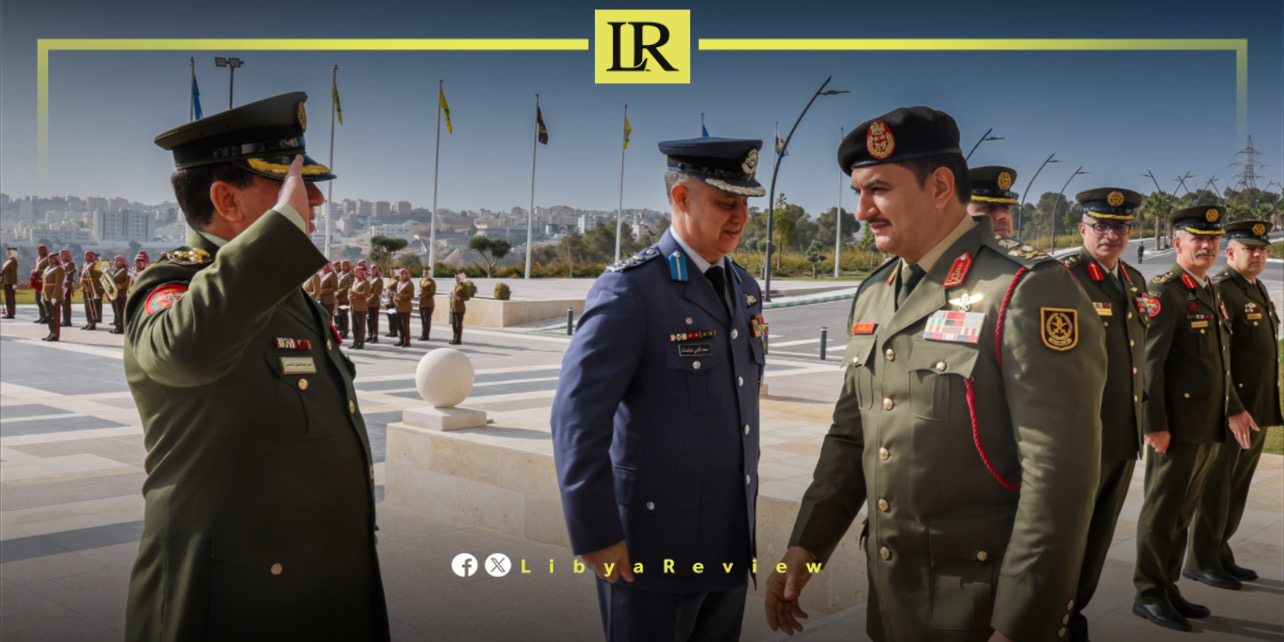
Lieutenant General Saddam Khalifa Haftar, Deputy Commander-in-Chief of the Libyan National Army, paid an official visit to the Hashemite Kingdom of Jordan on Tuesday to discuss ways to enhance military cooperation and coordination between the two countries.
The visit came at the invitation of the Jordanian side and reflects ongoing efforts to strengthen defense ties between Libya and Jordan.
Haftar was received at the headquarters of the Jordanian Armed Forces, where he was welcomed by the Chairman of the Joint Chiefs of Staff, Yousef Ahmed Al-Huneiti, along with senior Jordanian military and security officials. Official reception ceremonies were held, underscoring the importance both sides attach to the visit and to bilateral military relations.
During the visit, Haftar held a series of meetings with Jordanian military leaders focusing on expanding cooperation in training, professional development, and capacity building. Discussions also covered the exchange of military expertise and best practices aimed at raising the efficiency and operational readiness of armed forces in both countries.
Officials from both sides emphasized the value of continued coordination in addressing regional security challenges and promoting stability.
Haftar conveyed the greetings and appreciation of the Commander-in-Chief of the Libyan National Army, Khalifa Haftar, to His Majesty King Abdullah II and to the Jordanian people.
He highlighted the depth of relations between Libya and Jordan, noting the historical ties and mutual respect that have long characterized cooperation between the two nations.
Jordanian officials reaffirmed their commitment to strengthening defense cooperation with Libya and supporting efforts aimed at enhancing institutional capacity and military professionalism. The talks reflected shared interests in stability, security coordination, and the development of modern military capabilities.
The visit is part of broader regional engagement by the Libyan National Army to deepen partnerships with Arab countries, benefit from regional military experience, and reinforce professional cooperation in support of security and stability across the region.

