
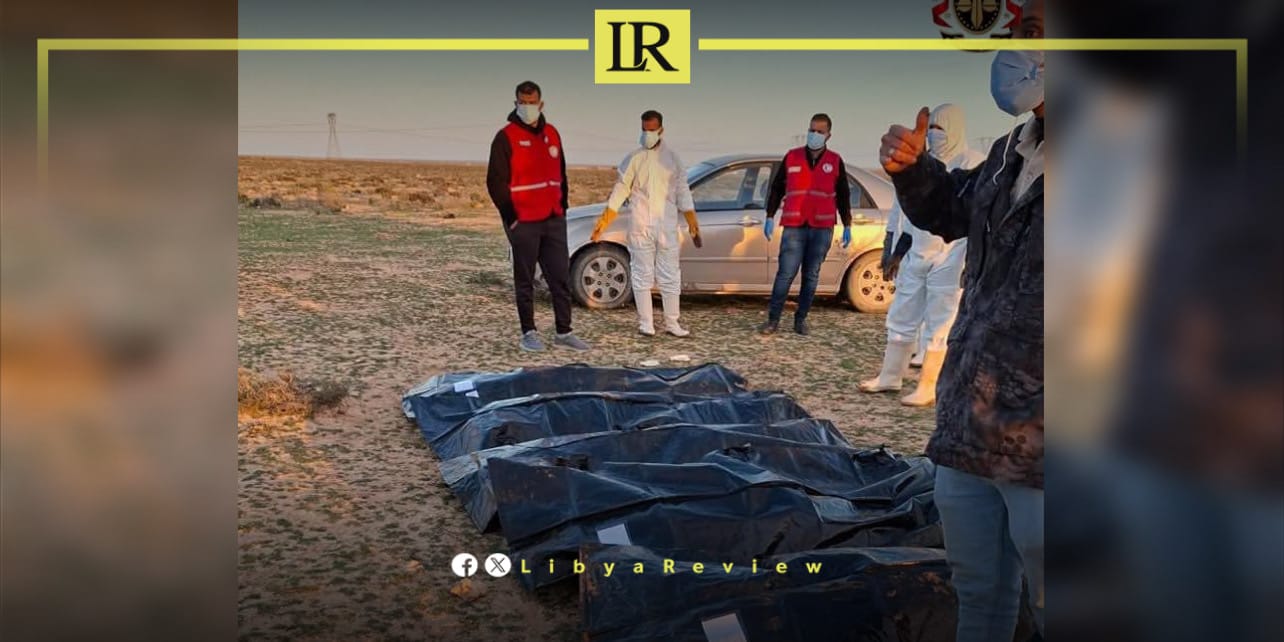
Libya’s Attorney General’s Office announced on Friday the discovery of a mass grave containing the remains of 21 migrants, as authorities intensified investigations into serious crimes linked to human trafficking networks operating in the country.
In an official statement, the prosecution said the discovery followed coordinated operations by the Internal Security Agency and Battalion 166, which uncovered evidence implicating an organised criminal group involved in irregular migration and human trafficking activities in the cities of Al-Kufra and Ajdabiya.
According to investigators, members of the group were responsible for detaining migrants under coercive conditions and subjecting them to severe abuse and torture. The victims were reportedly held to extort money from their families in exchange for release. During the operation, prosecutors and judicial police freed 195 migrants who had been held in forced detention and exposed to repeated mistreatment.
The investigation also led authorities to identify a burial site containing 21 bodies belonging to migrants described as vulnerable individuals who were killed during their captivity. The Attorney General’s Office said forensic teams have been instructed to collect DNA samples from the remains and carry out full autopsies to establish identities and determine the causes of death.
A suspect identified by the initials (M.F.H.) was arrested and questioned by a prosecutor at the Benghazi Attorney General’s Office. He was formally confronted with evidence relating to multiple charges, including the murder of migrants and human trafficking offences. Prosecutors confirmed that three public criminal cases had previously been filed against the suspect for similar crimes, and legal procedures are now under way to refer him to trial.
The prosecution also ordered security authorities to take all necessary measures to dismantle the criminal network and pursue other individuals believed to be involved. Officials stressed that the investigation remains ongoing and that further arrests are expected.
The case highlights the continuing risks faced by migrants in Libya and underscores renewed efforts by judicial authorities to hold traffickers accountable for grave human rights violations.

