
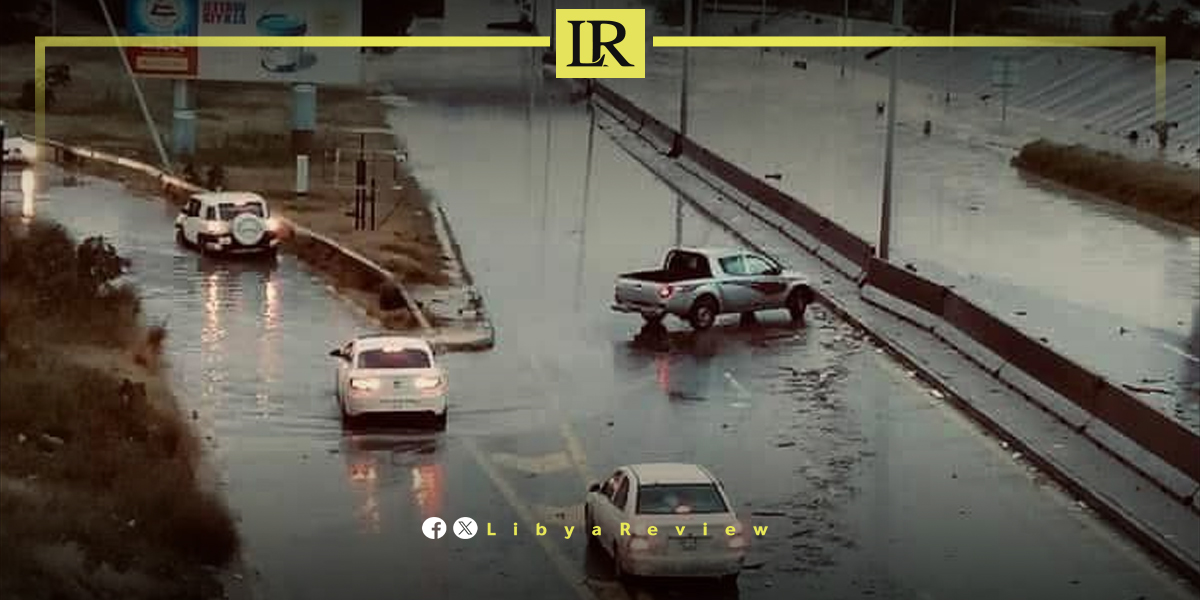
Libya’s National Center of Meteorology has issued a warning of potential flash floods in the northeastern parts of the country on Tuesday, as weather forecasts indicate heavy rainfall accompanied at times by thunderstorms.
The center cautioned that the expected conditions could lead to surface runoff and the overflow of local valleys, particularly in low-lying and mountainous areas.
According to the forecast, weather conditions on Saturday remain relatively moderate across most regions. However, starting Sunday, much of the country is expected to experience unstable weather, including strong winds that may raise dust and sand, significantly reducing horizontal visibility, especially across northern areas. A noticeable drop in temperatures is also forecast in western Libya, with similar conditions extending to the east by Monday.
Meteorologists expect cloud cover to increase intermittently over northwestern regions during the next two days, bringing scattered rainfall to some areas. Rainfall activity is forecast to intensify on Monday across most northern regions, particularly during the evening, with the possibility of isolated thunderstorm cells.
The northeastern regions are expected to see the most intense rainfall on Tuesday, heightening concerns about flooding.
The warning follows a severe dust storm that recently swept across eastern and southern Libya, causing fatalities and widespread damage. The Libyan Red Crescent reported that two people were killed as a result of the storm, which also triggered multiple fires and caused the collapse of trees, billboards, lighting poles, and sections of residential walls.
Libya’s official news agency reported that authorities imposed a full curfew in several eastern areas and suspended many flights due to extremely poor visibility and strong winds associated with the storm. Emergency and civil protection teams were placed on high alert to respond to weather-related incidents and assist affected communities.
Authorities have urged residents to exercise caution, particularly in flood-prone areas and near valleys, and to follow official guidance issued by meteorological and emergency services.

