
Libya’s Interior Ministry under the parliament-designate government has discussed new measures to curb violations against the country’s public electricity network, as part of wider efforts to protect vital infrastructure and ensure stable power supply.
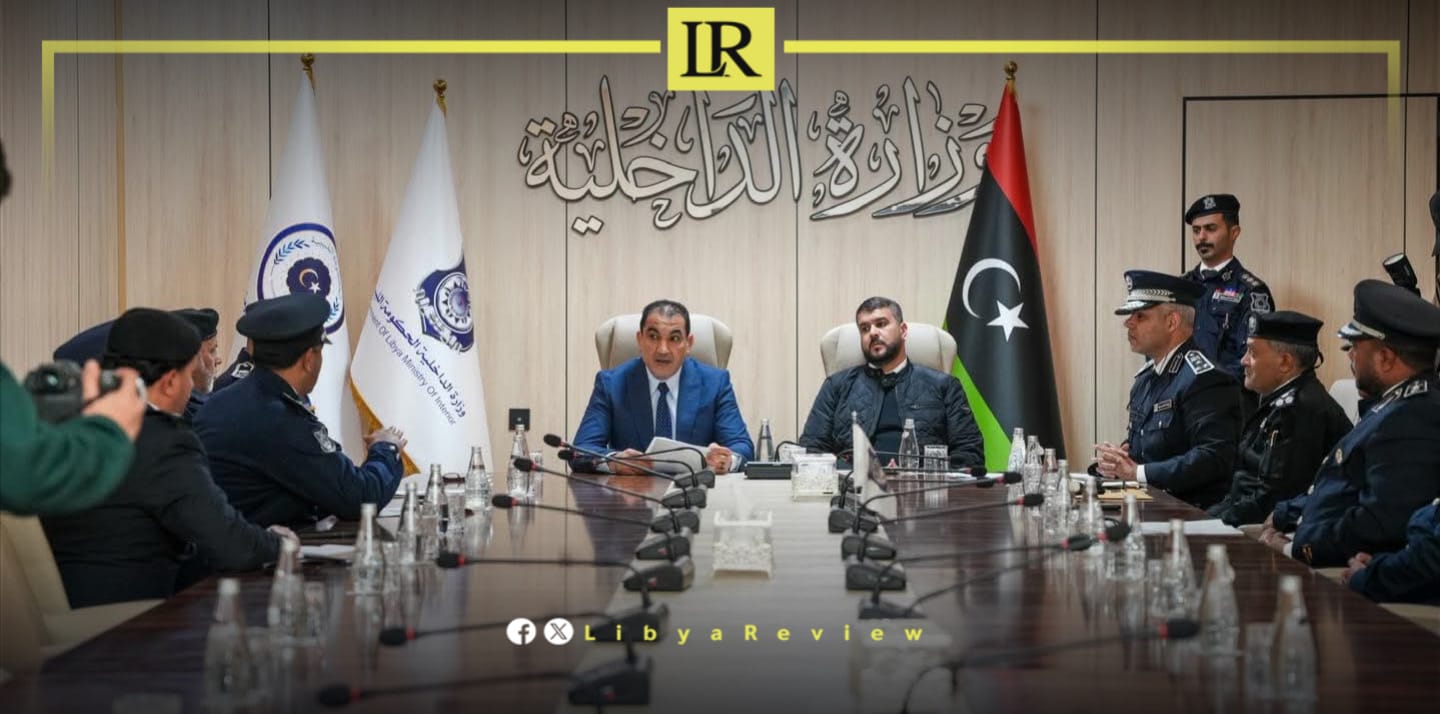
In a statement issued on Sunday, the ministry said Interior Minister Major General Essam Abu Zariba and Deputy Minister Major General Faraj Aqaim held a meeting in Benghazi to review the current state of the national power grid and the repeated infringements affecting it. The meeting was attended by several directors of the electricity police branches from across eastern Libya.
According to the statement, discussions focused on preparing a strict security plan aimed at limiting illegal connections, sabotage, and other forms of abuse targeting the electricity network. Officials also reviewed periodic reports submitted by electricity police departments, detailing the nature, scale, and geographical distribution of violations recorded in recent months.
The meeting further examined operational challenges facing electricity police units, including manpower shortages and the need for additional logistical and technical equipment in certain areas. Ministry officials noted that some regions require enhanced resources due to their size, remoteness, or frequency of reported violations.
Abu Zariba and Aqaim stressed that the past period has seen a noticeable decline in the number of assaults on the public electricity network. They attributed this improvement to increased coordination between security bodies and the electricity police, alongside more effective field monitoring.
The Interior Ministry reaffirmed its continued support for the electricity police, underlining their critical role in safeguarding the power grid and deterring offenders. Officials warned that violations against the network directly contribute to power instability, including fluctuations, weak supply, and outages that affect households, businesses, and public services.
The ministry said protecting the electricity network remains a security and economic priority, especially as Libya continues efforts to stabilise essential services. It added that the planned security measures aim not only to reduce violations but also to reinforce the rule of law and protect public resources across the country.

