
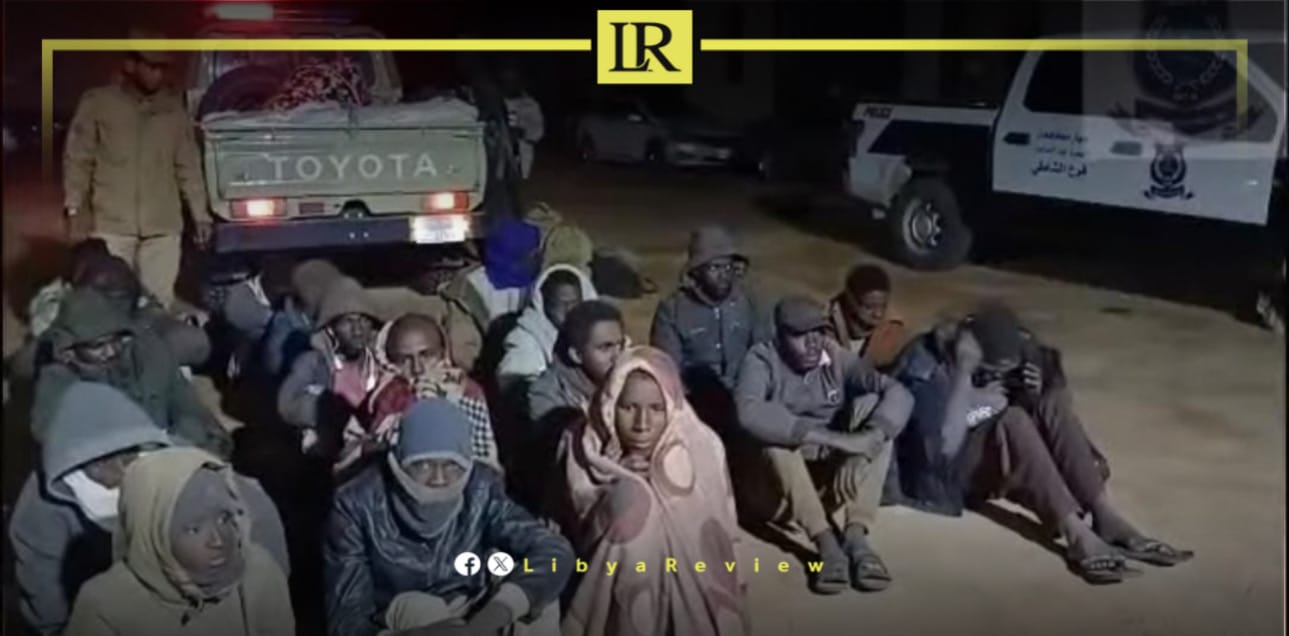
Libya’s Anti-Illegal Migration Agency has announced the detention of groups of irregular migrants who entered the country through its southern borders, as part of ongoing security operations aimed at curbing irregular migration.
In a statement issued on Sunday, the agency said the migrants were apprehended during routine monitoring and border control efforts. Legal procedures were taken against those detained before they were transferred to official shelter centres affiliated with the Anti-Illegal Migration Agency, pending their deportation to their countries of origin in accordance with applicable laws and regulations.
The agency stressed that the operation falls within its continued efforts to protect Libya’s borders and combat irregular migration, carried out in full coordination with the Libyan Arab Armed Forces. These measures form part of wider security campaigns targeting smuggling networks and unlawful infiltration into Libyan territory, particularly along southern desert routes frequently used by migrants.
Libya remains a key transit and destination country for migrants in the Central Mediterranean region. According to the International Organization for Migration (IOM), the number of migrants in Libya is approaching one million. The latest Displacement Tracking Matrix assessment estimates that 928,839 migrants of 44 different nationalities were present in the country between August and October 2025.
IOM data also shows that more than 27,000 migrants were intercepted at sea and returned to Libya during 2025, marking a 25% increase compared with the previous year. Over the same period, at least 1,314 people were recorded as dead or missing along the Central Mediterranean migration route linking Libya and Tunisia to Europe.
The United Nations has repeatedly warned that Libya’s growing migrant population is placing significant pressure on the country’s security, humanitarian, and service capacities. International agencies say the scale of migration flows, combined with economic and governance challenges, has increased risks for vulnerable groups, including women and children.
Libyan authorities maintain that strengthening border control and dismantling smuggling networks remain essential to addressing irregular migration, while calling for greater international cooperation to tackle the root causes driving migrants toward Libya.

