
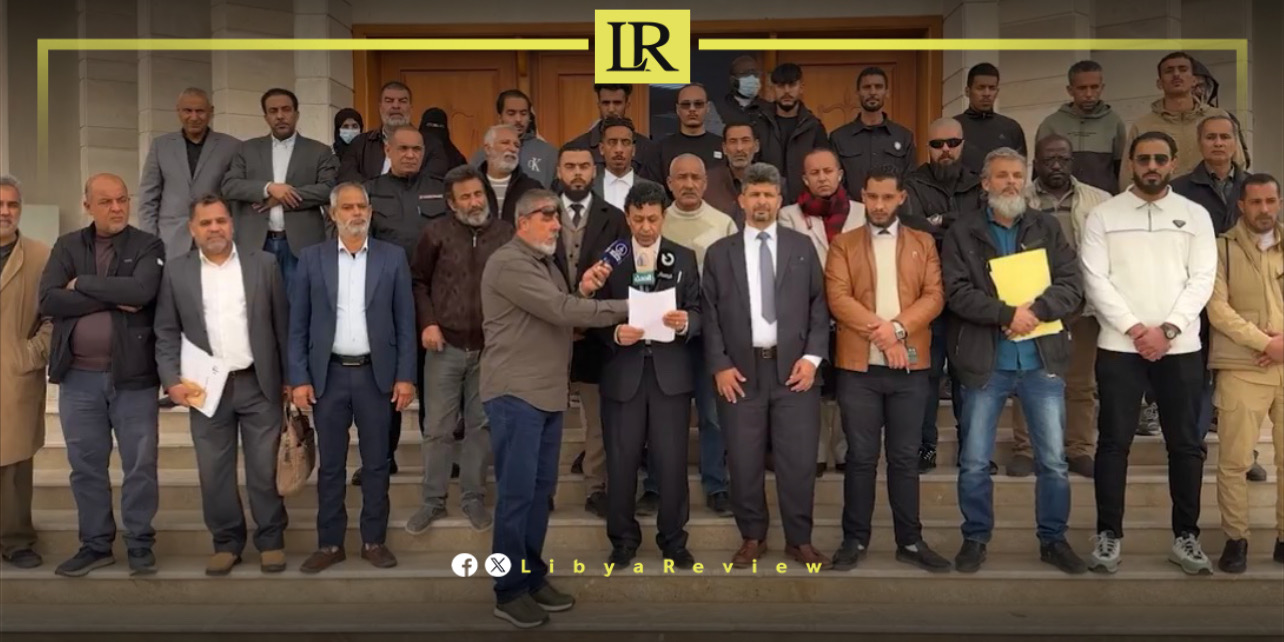
Judges and senior judicial officials in the Libyan city of Sirte staged a protest on Sunday to reaffirm the independence and unity of the country’s judicial institution, warning against political interference and attempts to fragment the judiciary amid escalating legal and constitutional disputes.
The demonstration took place in front of the Sirte Courts and Prosecution Complex and was attended by heads and members of judicial bodies, as well as officials from the local branch of the Ministry of Justice. Participants described the judiciary as a cornerstone of the rule of law and stressed that any threat to its unity or independence would undermine justice and institutional stability.
In a joint statement, the judges said they are closely following recent judicial developments and the broader political divisions affecting the legal system. They emphasized their firm commitment to preserving a unified judiciary and rejected any measures that could weaken or divide judicial authority.
The protesters underscored that all judicial bodies across Libya must continue to recognize the Supreme Judicial Council in its current structure as the only legally authorized body responsible for managing judicial affairs. They warned against attempts to impose alternative arrangements or bypass existing legal frameworks, calling such actions unlawful and harmful to the integrity of the judiciary.
The statement also urged postponing engagement with any constitutional or judicial changes until Libya adopts a permanent constitution, arguing that piecemeal legal amendments risk deepening institutional divisions rather than resolving them. Judges called on their colleagues nationwide to stand united under the existing judicial system to protect independence and public confidence.
The protest follows a recent ruling by the Constitutional Chamber of the Supreme Court, which declared four laws passed by the House of Representatives unconstitutional. The decision was welcomed by several legal experts and political figures, who stressed that the ruling is binding on all state institutions.
Among the annulled laws were provisions granting parliament the authority to appoint the head of the Supreme Judicial Council and requiring the council’s president to take an oath before the legislature. Critics said these measures violated the principle of separation of powers and posed a direct threat to judicial independence.

