
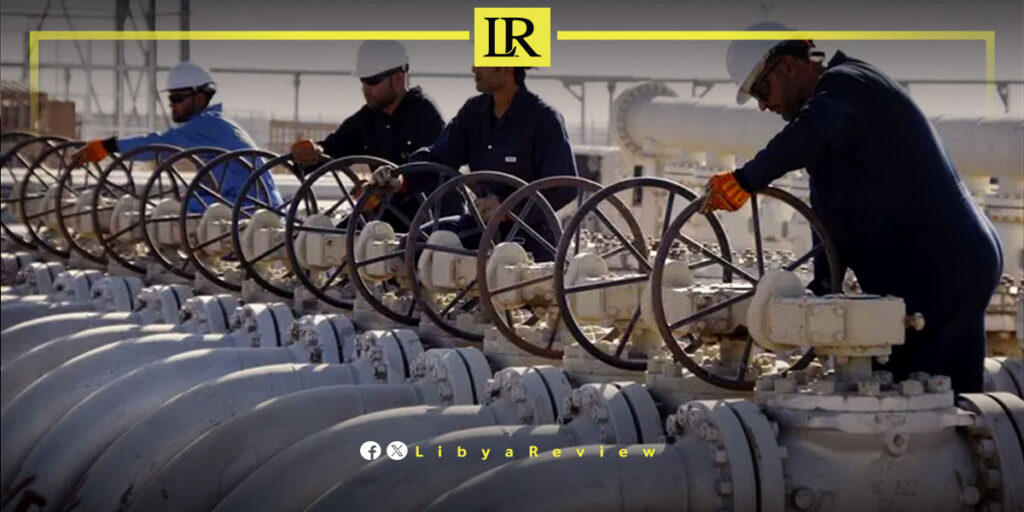
Libya plans to significantly increase its natural gas production over the next five years to supply larger volumes to European markets by the start of the next decade, the head of the National Oil Corporation said.
Masoud Suleiman, chairman of Libya’s state-owned National Oil Corporation, said the country aims to raise gas production to nearly one billion standard cubic feet per day. He added that Libya also intends to begin shale gas exploration during the second half of the current year.
Speaking at the LNG 2026 conference in Qatar, Suleiman said the expansion strategy forms part of Libya’s efforts to strengthen its role as a regional energy supplier and diversify export routes beyond crude oil. He noted that gas development remains a priority as European demand for alternative supplies continues to grow.
According to Suleiman, Libya holds around 80 trillion cubic feet of gas reserves, including both conventional and unconventional resources, Reuters reported. He said these reserves offer strong long-term potential if supported by sustained investment and political stability.
Libya currently exports only limited volumes of natural gas through the Greenstream pipeline, which links western Libya to Italy under the Mediterranean Sea. Officials have previously said that technical constraints and underinvestment have restricted export capacity in recent years.
Suleiman also confirmed that Libya will announce the winners of its latest energy licensing round on 11 February. He said the bidding round attracted broad international interest, with around 37 companies participating from Asia, Europe, North America, the Middle East and Africa.
Major firms involved include Chevron, Italy’s Eni and US-based ConocoPhillips, alongside a consortium that includes Spain’s Repsol. The licensing round is viewed as a key test of investor confidence in Libya’s energy sector amid ongoing political uncertainty.
Libyan officials hope that increased gas production will help stabilise state revenues, support domestic power generation and position the country as a reliable supplier to European markets over the coming years.

