
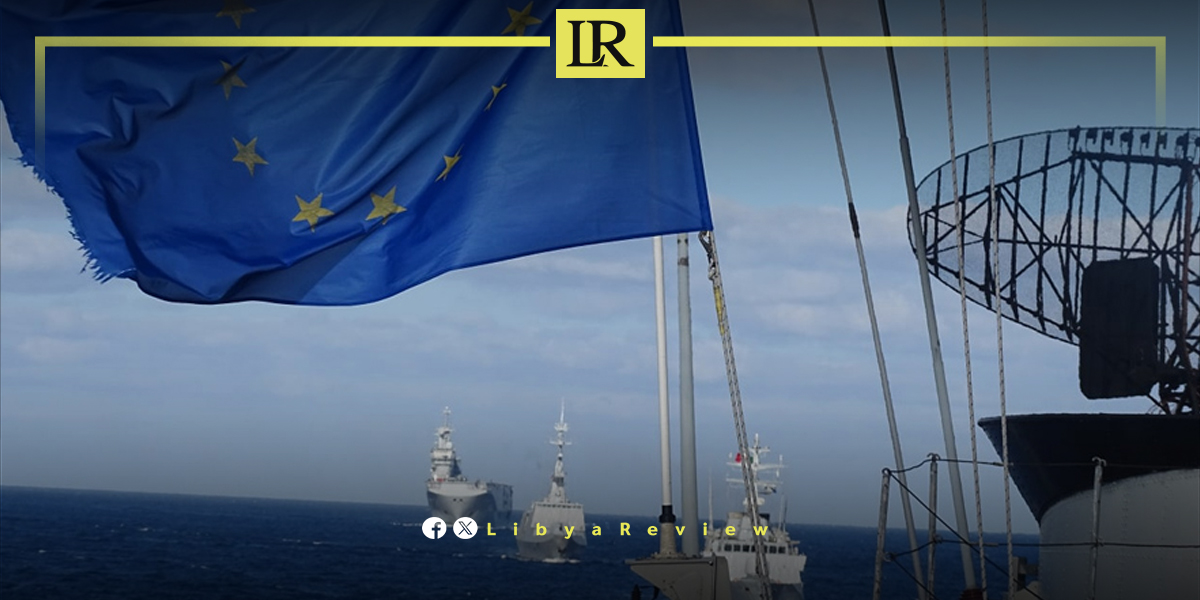
The European Union’s naval and aerial monitoring mission Operation Irini significantly intensified its activities in the central Mediterranean during January, recording 65 additional suspicious air movements and more than 300 new radio contacts with commercial vessels, according to its latest updated report.
The figures are drawn from the mission’s report updated on February 2, 2026, covering the enforcement of the UN arms embargo on Libya.
According to the report, the total number of suspicious flights monitored rose to 2,415, reflecting an increase of 65 flights compared to the previous update in late January. This rise forms part of a broader trend, with more than 21,500 additional air cases recorded between November and February, indicating sustained pressure on air traffic routes considered at high risk of arms embargo violations.
Maritime monitoring activity also increased sharply. Radio communications with commercial vessels reached 304 calls, up from 450 in the previous month. On a quarterly basis, the increase exceeds several hundred calls, confirming a gradual but consistent intensification of maritime surveillance operations.
Boarding inspections of vessels remained unchanged at 33 operations, with three confirmed diversions. Meanwhile, so-called “friendly visits” rose slightly from 782 to 783, aligning with the overall upward trend in operational activity.
At the port level, recommendations for inspections at European ports increased to 101, compared with 97 in the January report, while actual inspections remained steady at 76. The number of special reports submitted to the UN Panel of Experts also rose, from 81 to 84.
The report further highlighted an expanded contribution from the European Union Satellite Centre (SatCen), which produced 4,729 sets of imagery and analytical products, up from 4,663 in the previous month.
Operation Irini continues to monitor 25 airports and airstrips and 16 ports, with participation from 24 EU member states. The mission’s mandate has been extended until March 31, 2027, as part of the implementation of United Nations Security Council resolutions related to the arms embargo on Libya.

