
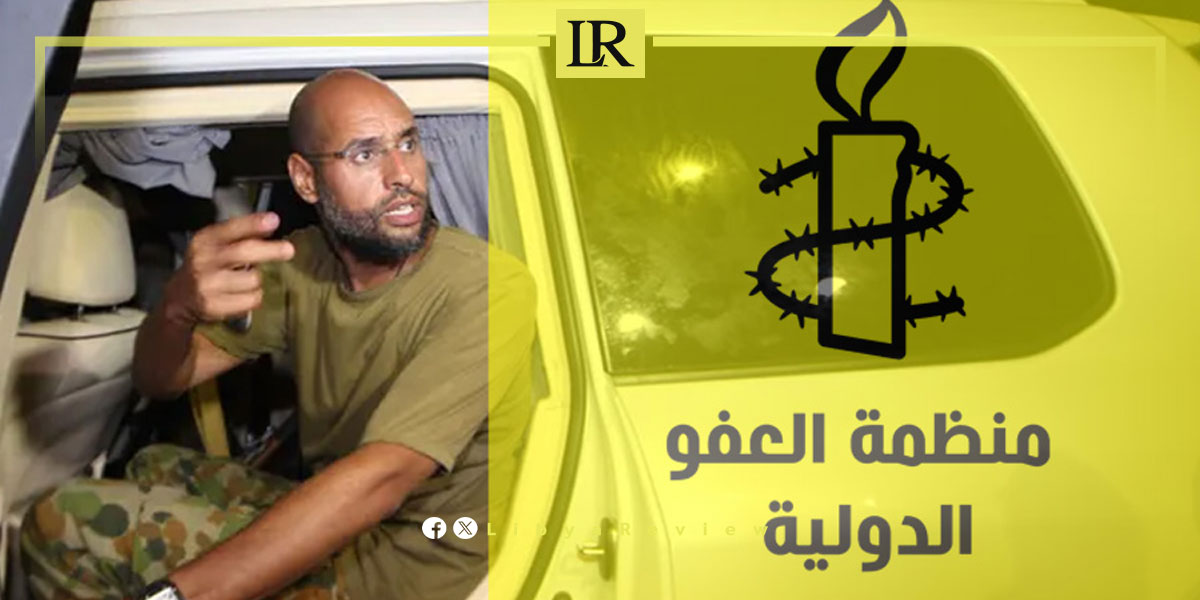
Amnesty International said the killing of Saif al-Islam Gaddafi underscores the entrenched culture of impunity in Libya and has deprived victims and their families of justice and accountability.
In a statement, the organization said the incident reflects a broader pattern of serious violations of international law that continue to occur in Libya amid the absence of effective accountability mechanisms. Amnesty warned that armed groups and militias operate in an environment where perpetrators expect to evade responsibility, allowing abuses to persist unchecked.
Amnesty International called on Libyan authorities to ensure that the investigation announced by the public prosecutor is carried out promptly, independently, impartially, and transparently. The organization stressed that all those suspected of involvement must be held accountable through fair trials that comply with international legal standards, rather than through extrajudicial actions that further weaken the rule of law.
The organization recalled that the International Criminal Court had previously issued an arrest warrant for Saif al-Islam Gaddafi on charges of crimes against humanity. Despite this, successive Libyan authorities refused to surrender him to the court, a stance that Amnesty said contributed to the prolonged denial of justice for victims of serious crimes committed during and after the 2011 conflict.
According to Amnesty, the killing has permanently denied survivors and relatives of victims the right to truth, justice, and reparations.
The organization emphasized that accountability through lawful judicial processes is essential to breaking cycles of violence and preventing future abuses, warning that revenge killings or unlawful acts only deepen instability.
Amnesty International also urged Libyan authorities to fully cooperate with the ICC by arresting and surrendering other individuals wanted by the court.
It said such cooperation is critical to restoring confidence in the justice system and demonstrating a genuine commitment to ending impunity.
The organization concluded that lasting peace and stability in Libya cannot be achieved without accountability for past and ongoing crimes.
It warned that unless meaningful steps are taken to strengthen the rule of law and ensure justice for victims, Libya will remain vulnerable to continued violence and human rights violations.

