
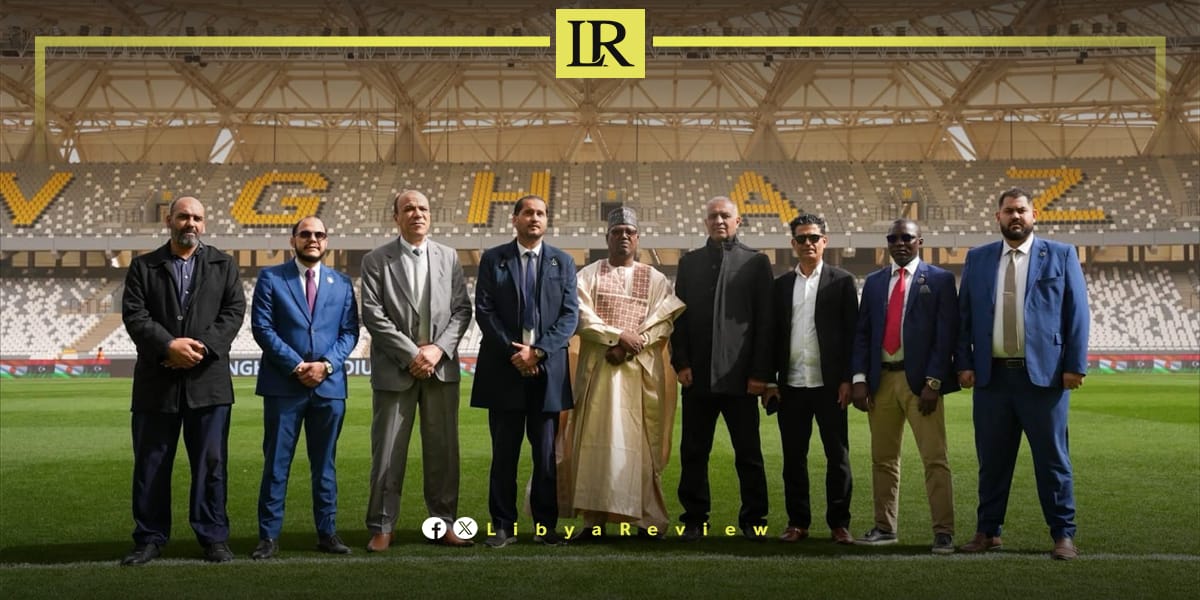
The ambassador of the Republic of Niger has toured key landmarks and development projects in Benghazi, praising Libya’s ongoing reconstruction efforts and the pace of urban renewal in the eastern city.
The visit took place as part of an official trip to Benghazi, where the ambassador was accompanied by the Director of the Department of Public Protocol, Bassem Al-Suwaii, adviser Mohamed Al-Arfi, and a representative from the Department of African Affairs. The tour aimed to familiarise the visiting diplomat with Benghazi’s national symbols and major development initiatives.
The ambassador began his visit at the mausoleum of Sheikh Omar Al-Mukhtar, a revered national figure and symbol of Libya’s struggle against colonial rule. He was briefed on the historical and national significance of the site and expressed deep respect for the sacrifices made by the Libyan people in pursuit of freedom and independence. The ambassador described Omar Al-Mukhtar as a unifying figure whose legacy continues to inspire resistance and dignity across the region.
The tour also included a visit to Benghazi International Stadium, one of the city’s most prominent modern infrastructure projects. The Nigerien ambassador expressed admiration for the scale and quality of the facility, describing it as a clear reflection of Benghazi’s urban revival and renewed investment in public infrastructure.
He commended the role of the Development and Reconstruction Fund of Libya, overseen by Belgassem Khalifa, in delivering major development projects. According to the ambassador, the stadium stands as a successful model of modern reconstruction, highlighting the efficiency of national expertise and the speed of implementation.
The ambassador noted that the progress witnessed across Benghazi reflects a genuine determination to rebuild the city after years of conflict. He added that the ongoing reconstruction efforts strengthen Benghazi’s position at both national and regional levels and open new opportunities for cooperation between Libya and African partners.
Officials accompanying the visit said such tours help deepen diplomatic ties and promote a clearer understanding of Libya’s development priorities. The visit concluded with renewed emphasis on strengthening Libyan-African relations and supporting stability and development across the region.

