
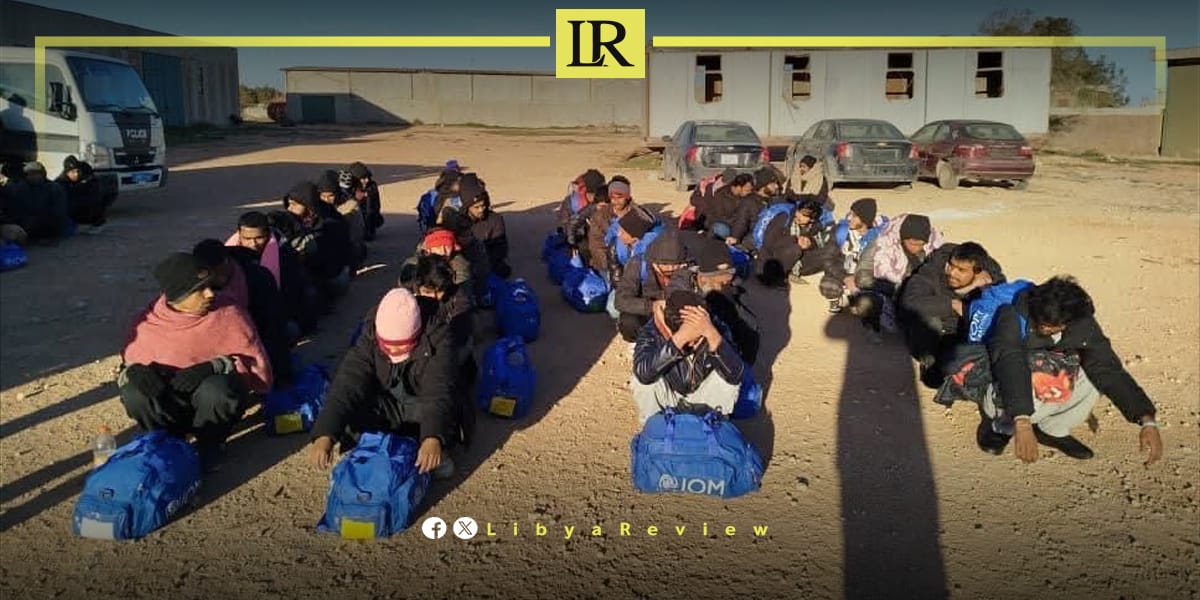
Libyan authorities have deported 136 irregular migrants of different nationalities as part of ongoing efforts to enforce the law, regulate migration, and maintain security and stability across the country.
According to a statement by the Anti-Illegal Migration Agency, the Shahat branch deported 26 Egyptian migrants through the Emsaad land border crossing after completing all required legal procedures. The agency said the operation was conducted in coordination with the relevant security bodies and followed national regulations governing voluntary and compulsory returns.
In a separate operation, the Derna branch of the agency deported 110 Bangladeshi migrants who had been detained while attempting to migrate irregularly via Libya’s coastline. Officials confirmed that some of those deported were subject to security restrictions, prompting additional checks before the completion of the process.
The migrants were initially transferred to the Greater Benghazi branch of the Anti-Illegal Migration Agency to finalise documentation and logistical arrangements ahead of their return to their countries of origin. The agency said these steps were necessary to ensure that deportations are carried out in an orderly and lawful manner.
Libyan authorities have repeatedly stressed that the fight against irregular migration remains a national priority, particularly given the security, humanitarian, and economic challenges associated with uncontrolled movements. The agency added that operations are continuing across several regions to address overcrowding in detention facilities and dismantle smuggling networks.
The Anti-Illegal Migration Agency reaffirmed its commitment to working with national institutions and international partners to manage migration files, enhance border control, and respect human rights standards. Officials said sustained coordination is essential to protect national security while ensuring the dignified treatment of migrants throughout all procedures.
Authorities said continued enforcement aims to reduce risks at sea, support stability in border areas, and send a clear message against organised migrant smuggling networks operating across Libyan territory.

