
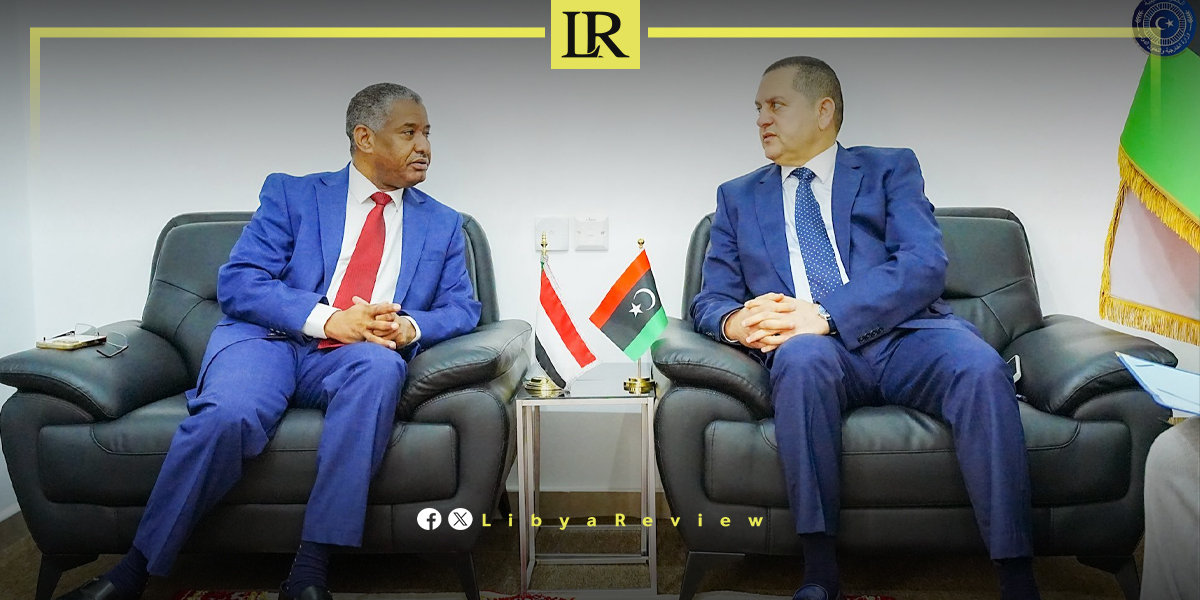
Libya’s Minister of Foreign Affairs and International Cooperation, Abdelhadi Al-Hwaij, held talks in Benghazi with Sudan’s Consul General, Abdul Rahman Rahmatullah, to review issues concerning the Sudanese community and strengthen bilateral coordination between the two countries.
During the talks, the two diplomats discussed humanitarian and educational matters affecting Sudanese nationals residing in Libya, particularly in light of the ongoing crisis in Sudan. Both sides discussed measures to ensure the continued operation of Sudanese schools established in several Libyan cities, with an emphasis on safeguarding students’ right to an uninterrupted education.
The meeting also addressed the organization of secondary school examinations for around 2,000 Sudanese students in Benghazi.
Additionally, they reviewed logistical and administrative arrangements in coordination with relevant Libyan authorities to facilitate the exams and provide a stable academic environment. Officials described these efforts as part of Libya’s broader commitment to supporting Sudanese families and helping students continue their education despite exceptional circumstances in their home country.
The discussions also addressed the broader humanitarian conditions facing the Sudanese community in Libya. Both parties underlined the importance of strengthening coordination mechanisms to ensure access to essential services and dignified living conditions. The talks reflected the longstanding historical and social ties between the Libyan and Sudanese peoples, as well as Libya’s stated approach of regional solidarity and cooperation.
For his part, the Sudanese consul expressed appreciation for the facilitation and services provided by Libyan authorities, praising the level of institutional cooperation between the two sides. He noted that continued dialogue and coordination remain crucial in addressing community needs during this sensitive period.
Meanwhile, Al-Hwaij reaffirmed Libya’s commitment to enhancing relations with Sudan and expanding consultation across areas of mutual interest. He stressed that sustained cooperation on humanitarian, educational, and diplomatic matters would contribute to regional stability and strengthen the partnership between the two neighboring countries.

