
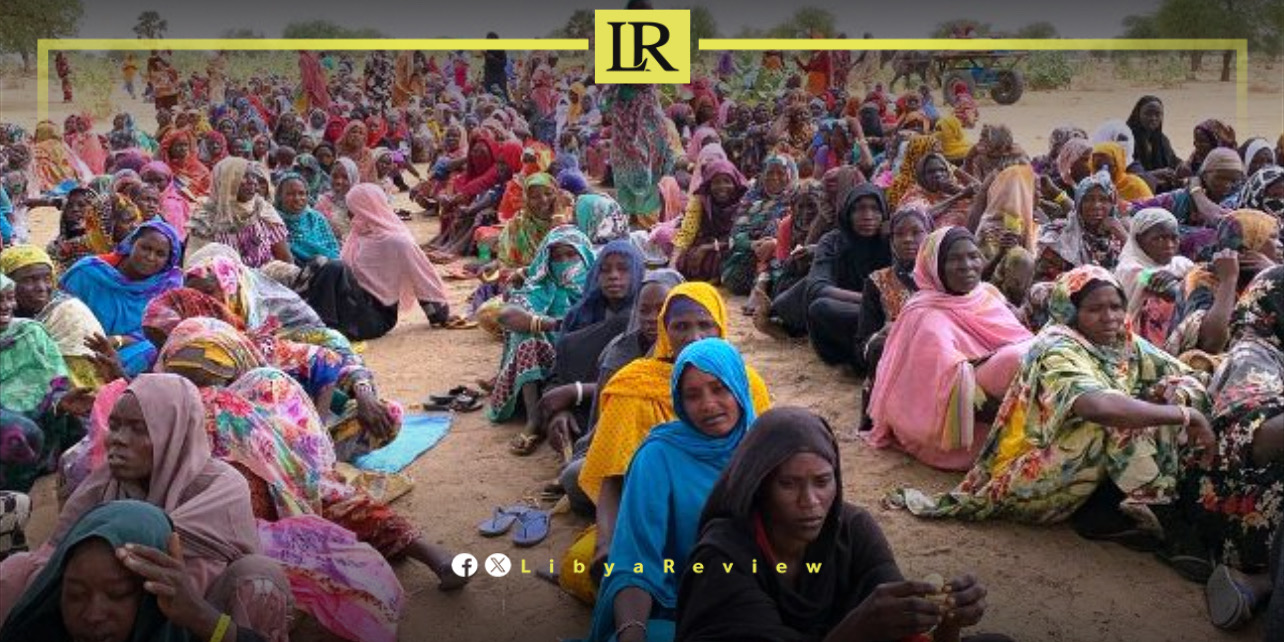
The United Nations High Commissioner for Refugees has recorded the arrival of more than 552,170 Sudanese refugees in Libya since April 2023, when conflict erupted in Sudan and triggered one of the region’s largest displacement crises.
Despite intensified border controls and heightened security measures by Libyan authorities, refugees continue to enter the country through remote desert crossings and irregular routes.
According to UN data, around 89,848 Sudanese refugees are officially registered at the agency’s center in Tripoli. However, the southeastern city of Kufra alone has received approximately 340,000 Sudanese arrivals, underscoring the scale of movement through Libya’s vast southern borders. Insecurity in border areas and tighter surveillance have pushed many refugees to take longer and riskier paths. Meanwhile, arrivals via Chad have declined significantly, averaging roughly 70 people per day.
The agency cautions that obtaining precise figures remains challenging. Libya shares long and sparsely monitored borders with Sudan, Chad, and Egypt, and irregular entry patterns complicate accurate tracking. In addition, many refugees relocate internally toward coastal cities, making population data fluid and difficult to verify.
Sudanese refugees face considerable obstacles in accessing essential services. A lack of official documentation limits their ability to receive public healthcare, while financial hardship prevents many families from paying school fees typically applied to foreign nationals. Overcrowded hospitals and strained public services further restrict access to medical care.
In November, authorities in eastern Libya removed residency requirements for Sudanese children seeking to enroll in schools, easing access to education. Although similar announcements were made in western Libya, implementation has been uneven, and many families continue to struggle with enrollment procedures.
Frequent security raids and enforcement operations have increased demand for shelter and heightened concerns over arbitrary detention and forced returns. Vulnerable groups, including women, children, and people with disabilities, face heightened protection risks.
Libya has become both a destination and transit country for those fleeing Sudan’s conflict. As displacement continues, humanitarian agencies warn that sustained support and coordinated policies are urgently needed to address growing needs while balancing security concerns.

