
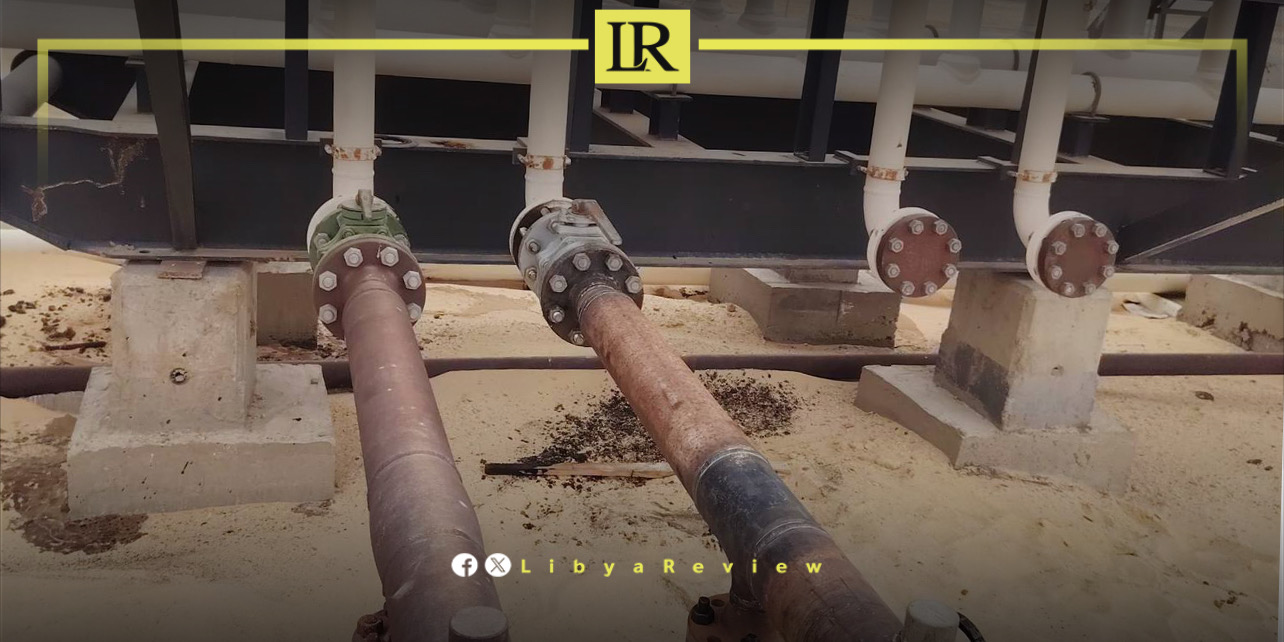
Libya’s Gulf Oil Company (AGOCO) has strengthened production at the Al-Bayda oil field after successfully bringing Well Z-13 into operation, adding new output to Libya’s oil sector as part of efforts to expand national production capacity.
The company announced that the well has been fully connected to the Al-Dour production station, following the completion of mechanical linkage works carried out by specialized maintenance teams. The operation included the construction of a 4-inch production pipeline extending two kilometers, a technical project that took 45 days of continuous work and involved pipeline maintenance units along with transport, engineering, and construction teams.
Initial testing results showed promising production indicators. According to technical data, Well Z-13 is currently producing 488 barrels of crude oil per day, with an oil gravity of 32 API, indicating medium-grade crude quality.
The tests also confirmed zero water content in the produced oil, highlighting the efficiency of the well’s output. Engineers reported that the well flows naturally with a wellhead pressure of 130 PSI through a 20/64-inch choke valve, while the production separator pressure at the station remained stable between 50 and 55 PSI.
In addition, the well is generating an estimated 24,000 standard cubic feet of gas per day, further contributing to the operational performance of the field.
The successful startup followed technical tests conducted in cooperation with ABITCO, under the supervision of the field’s production engineering coordination team. The results confirm the well’s ability to operate efficiently while improving the overall performance of the Al-Dour production station.
The new well is expected to support higher operational efficiency and increased production capacity at the Al-Bayda oil field, one of the assets operated by Gulf Oil Company in eastern Libya.
The development comes as Libya’s National Oil Corporation (NOC) continues implementing its broader strategy aimed at increasing oil output, rehabilitating aging infrastructure, and optimizing the use of existing oil resources. These efforts are part of a wider national plan to strengthen the oil sector, which remains the backbone of Libya’s economy and a major contributor to state revenues.
Energy officials have repeatedly stressed that improving production efficiency across existing fields and bringing new wells online will play a critical role in supporting Libya’s long-term economic stability and ensuring steady oil exports to international markets.
The launch of Well Z-13 at the Al-Bayda field reflects ongoing technical and operational initiatives designed to expand Libya’s oil production capacity while maintaining efficient field operations.

