
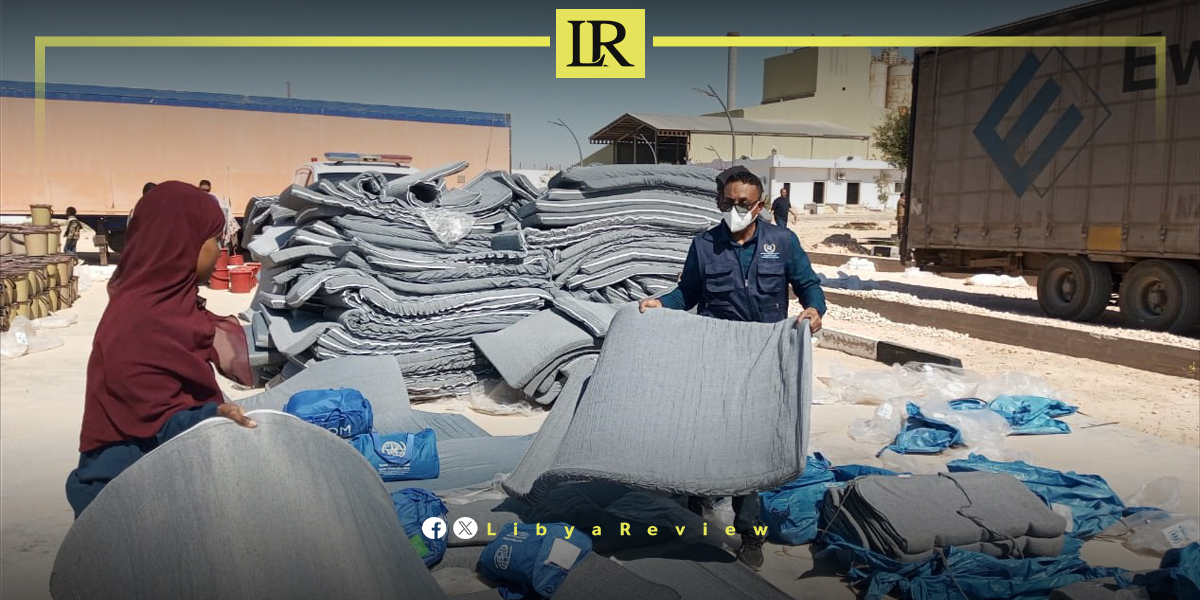
The Libyan Relief and Humanitarian Aid Authority has distributed humanitarian assistance to 550 irregular migrants of different nationalities at a migration center in the eastern Libyan city of Benghazi, as part of ongoing efforts to support vulnerable groups across the country.
The initiative was carried out under the direct instructions of the Chairman of the Authority, Salem Bouzreida, and in cooperation with the United Nations High Commissioner for Refugees (UNHCR).
According to the authority, the aid distribution targeted migrants currently housed at the Benghazi Migration Center, where humanitarian teams provided essential assistance aimed at improving living conditions for those facing difficult circumstances.
The assistance included basic humanitarian supplies intended to help migrants meet their daily needs while residing at the facility. Officials stated that the distribution process was conducted through an organized mechanism to ensure the aid reached all beneficiaries efficiently.
Strengthening Humanitarian Cooperation
The initiative forms part of the authority’s broader humanitarian programs designed to assist vulnerable populations in Libya, including migrants, displaced persons, and low-income families.
Officials noted that cooperation with international organizations remains a central component of the authority’s humanitarian work. Partnerships with agencies such as UNHCR help expand the scope of assistance and ensure that humanitarian support reaches individuals most in need.
The authority confirmed that similar initiatives will continue in different regions of the country as part of its commitment to delivering humanitarian relief and supporting communities facing difficult social and economic conditions.
Libya remains a major transit route for migrants attempting to cross the Mediterranean toward Europe, which has increased the need for humanitarian assistance inside migrant reception and holding centers across the country.
Through coordinated efforts with international partners, Libyan humanitarian institutions aim to improve conditions for migrants and provide essential services while broader migration challenges continue to affect the region.

