
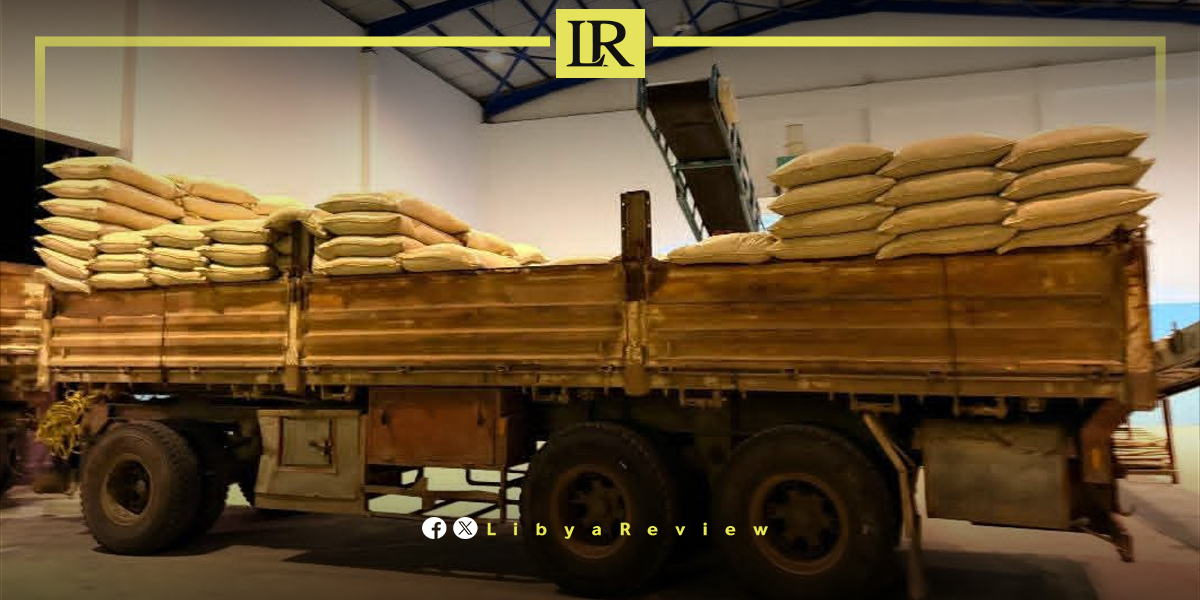
A major food production facility has resumed operations in central Libya after more than a decade of inactivity, with the reopening of the flour factory at the Sirte Milling and Feed Complex in the city of Sirte.
The factory was officially inaugurated following a full rehabilitation carried out by the National Development Agency (Libya), marking the return of one of the city’s key industrial facilities to production after more than 15 years of closure.
The opening ceremony was attended by the Director General of the National Development Agency Mahmoud Al-Farjani, Sirte Mayor Mukhtar Al-Maadani, Sirte Security Director Major General Ahmed Adam, and Sirte Economy Supervisor Hassan Aounallah, along with several officials from the agency and local government institutions.
Rehabilitation and Modern Equipment
According to the National Development Agency’s media office, the project involved comprehensive maintenance, rehabilitation, and the installation of modern equipment and technologies to restore the facility’s operational capacity.
The works were completed in less than ten months, enabling the factory to return to production after years of inactivity.
Production Capacity and Storage Facilities
The flour factory consists of five production floors, supported by six grain storage silos, each with a storage capacity of 1,000 tons of grain.
Officials stated that the facility has a daily production capacity of around 150 tons of flour, in addition to producing approximately 35 tons of bran per day.
Supporting Food Security and Local Economy
The reopening of the plant is expected to strengthen Libya’s food processing sector, improve domestic production capacity, and contribute to national food security.
Local authorities also expect the project to create new job opportunities and stimulate economic activity in Sirte and surrounding areas.
Officials said the rehabilitation of the Sirte Milling and Feed Complex forms part of broader development projects aimed at reviving idle industrial facilities and rebuilding productive sectors across Libya.
These initiatives are linked to the country’s broader development vision to expand industrial production, modernize infrastructure, and support long-term economic stability.

