
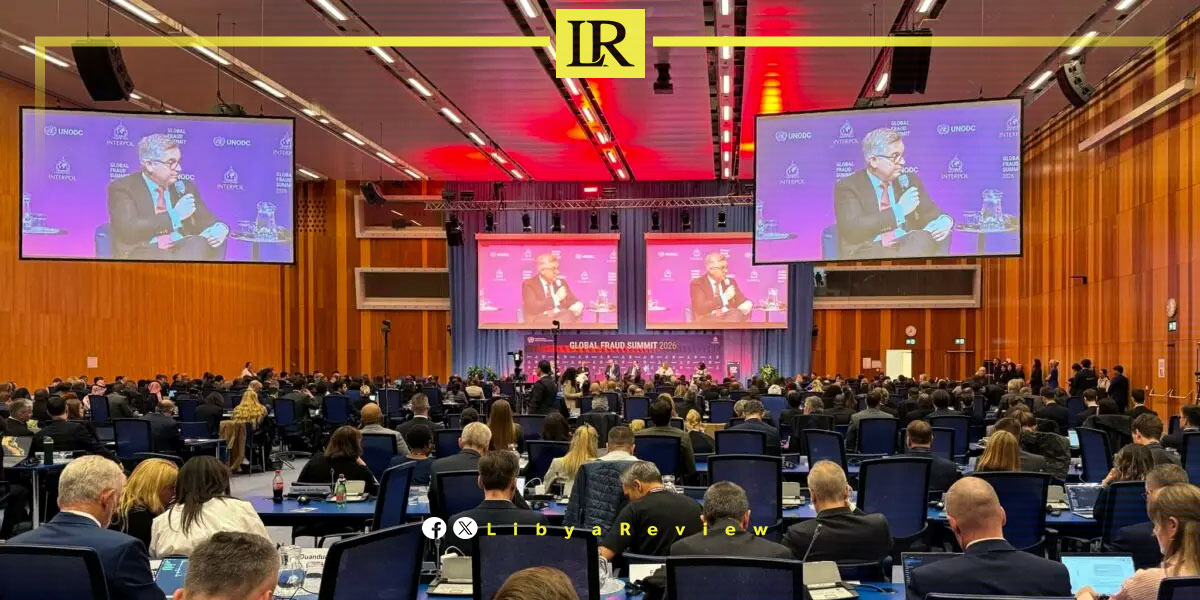
Libya has participated in the 2026 Global Anti-Fraud Summit held in Vienna, as part of ongoing efforts to strengthen international cooperation in combating financial crimes and organized fraud networks.
A delegation from Libya’s Administrative Control Authority took part in the two-day event, organized by the United Nations Office on Drugs and Crime in cooperation with INTERPOL. The summit brought together representatives from governments, international institutions, law enforcement agencies, and private sector entities to address the growing challenges posed by cross-border fraud.
Discussions focused on the rapid evolution of fraud in the digital era, where criminal networks increasingly rely on advanced technologies to conduct illicit activities. Participants highlighted that fraud has become one of the fastest-growing forms of organized crime worldwide, posing serious threats to economic stability and public trust.
Officials stressed that modern fraud schemes are no longer isolated incidents but part of complex, well-organized networks that operate across multiple jurisdictions. These groups exploit digital platforms to conceal identities, move illicit funds, and generate billions of dollars annually through activities such as online scams, financial manipulation, and money laundering.
Libya’s participation reflects its commitment to enhancing oversight mechanisms and adopting international best practices in combating financial crime. The Administrative Control Authority aims to benefit from global expertise in areas such as asset recovery, anti-money laundering strategies, and the tracking of illicit financial flows.
The summit also emphasized the importance of strengthening coordination between regulatory bodies, financial institutions, law enforcement agencies, and technology companies. Participants called for improved information sharing and the use of advanced digital tools to counter increasingly sophisticated fraud operations.
Libyan officials underscored the need to modernize regulatory frameworks and improve transparency within financial systems to better respond to emerging threats. Strengthening institutional capacity and ensuring accountability were identified as key priorities for building a more resilient financial environment.

