
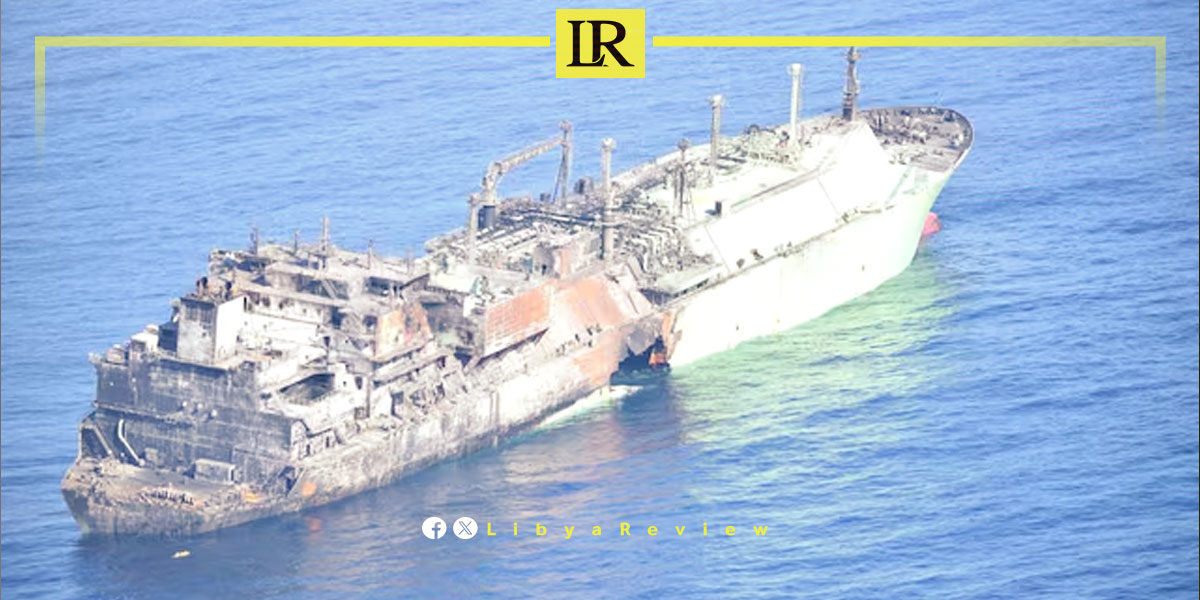
Libyan authorities have successfully towed a damaged Russian tanker more than 100 kilometers away from the country’s coastline in a complex maritime operation aimed at protecting critical infrastructure and reducing environmental risks.
The operation was carried out under the supervision of the National Oil Corporation, highlighting Libya’s response capabilities in handling offshore emergencies.
The tanker, identified as the Arctic Metagas, was involved in an explosion earlier in March, prompting urgent action to secure the vessel and prevent potential hazards near Libya’s oil and gas facilities. Authorities prioritized moving the ship away from sensitive areas off the coast of Misrata, a key hub for energy infrastructure.
According to available data, the tanker has been towed to a distance of approximately 103 kilometers from the Libyan coast, placing it in international waters. Satellite tracking shows that the vessel is now approaching areas closer to Malta’s maritime zone, raising questions about possible shifts in operational responsibility if it enters another search and rescue region.
The operation involved several tugboats, including the Maridive 701, which played a central role in guiding the damaged vessel safely offshore. Officials focused on minimizing risks linked to the tanker’s cargo, which includes around 62,000 metric tons of liquefied natural gas and approximately 900 tons of diesel fuel.
The towing process has not been without challenges. Rough sea conditions caused the towline to snap during the operation, requiring crews to carry out high-risk reconnection procedures amid strong waves and currents. Despite these difficulties, Libyan teams have maintained control over the vessel and continued to push it farther from the coastline.

