
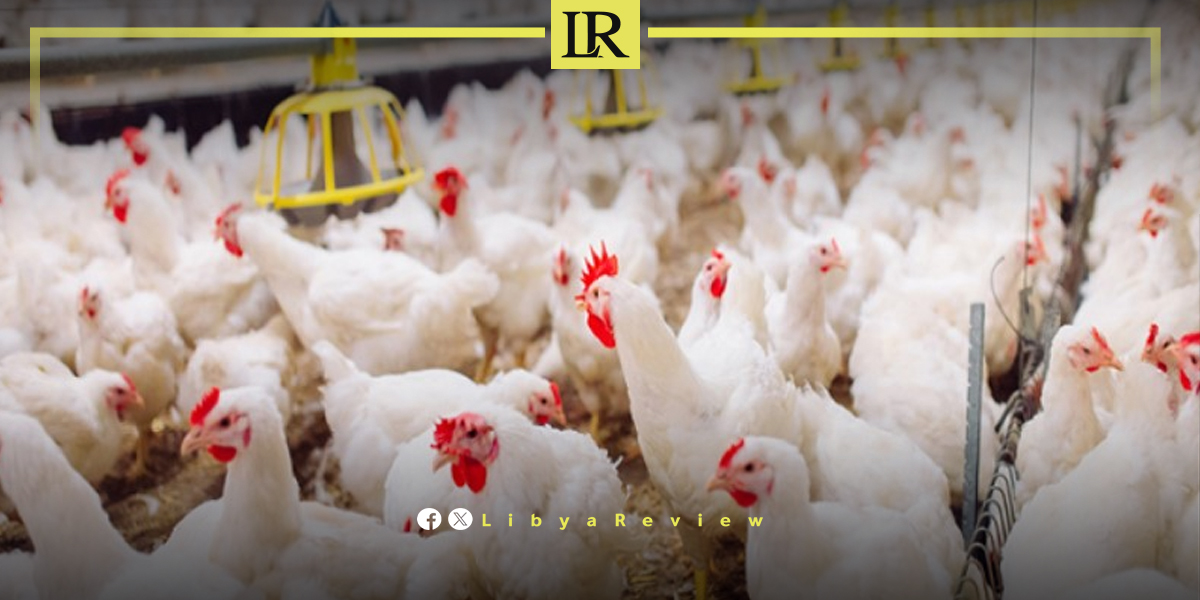
Poultry prices in Libya recorded a sharp increase during the first quarter of 2026, reflecting growing economic pressures on the country’s food sector and rising costs for consumers. According to data from Libya Trade Network, prices surged by approximately 92%, signaling a significant strain on both production and market stability.
The increase has been largely driven by exchange rate volatility, which continues to raise the cost of imports. Libya’s poultry industry depends heavily on foreign supplies, with nearly 80% of its inputs—particularly feed and production materials—sourced from international markets. This reliance makes the sector highly vulnerable to currency fluctuations and global price changes.
Feed costs alone rose by around 35% during the same period, placing additional pressure on producers. Many poultry farms have struggled to absorb these higher costs, forcing them to pass the increases on to consumers. As a result, poultry—once considered one of the more affordable protein sources—has become significantly more expensive for many households.
Supply chain disruptions have also played a role in the crsis. Ongoing geopolitical tensions have affected the availability and consistency of imported materials, leading to irregular supply and increased production challenges. These disruptions have further contributed to price volatility in local markets.
In response to rising prices, some consumers have begun turning to imported poultry products as an alternative, reflecting a shift in purchasing behavior driven by affordability concerns. However, this trend may add pressure on domestic producers, who are already facing difficult operating conditions.

