
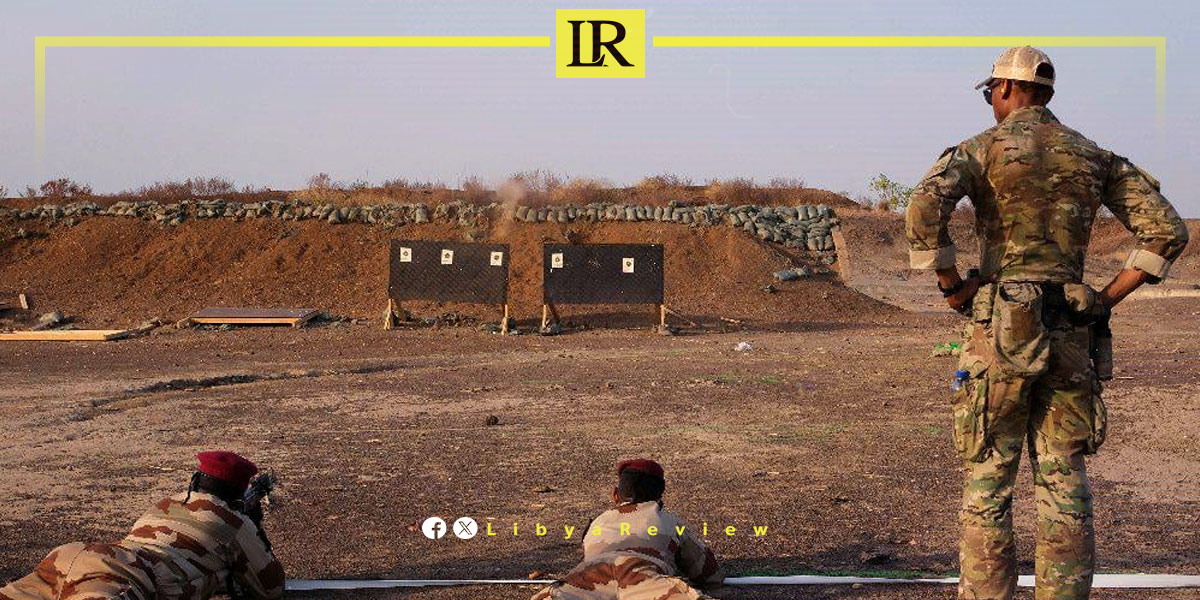
A recent report by Deutsche Welle has highlighted the broader geopolitical and strategic objectives behind the “Flintlock” military exercises held in the Libyan city of Sirte, pointing to Libya’s growing importance in global power competition.
According to the report, the drills reflect increasing Western focus on Libya amid rising rivalry with Russia and China, while also signaling a growing recognition among Libyan actors that national unity is essential for long-term stability.
The exercises brought together international forces, led by the US, alongside Libyan units from both eastern and western regions.
Sirte, once a major stronghold of extremist groups such as ISIS in 2015, has now become a platform for joint military coordination. A senior official from US Africa Command emphasized during the exercises the importance of integrating Libya’s divided military forces.
He noted that unified security institutions are critical to protecting the country and creating conditions for economic growth.
The report also underscored growing concerns among Western intelligence agencies over the expansion of extremist organizations, including ISIS and Al-Qaeda, particularly across the Sahel region.
These groups continue to carry out attacks, kidnappings, and cross-border operations, posing a threat not only to Libya but to wider regional stability.
From the US perspective, stabilizing Libya is closely tied to both security and economic interests.
Officials indicated that Libya’s strategic location and resource wealth make it a key player in securing supply chains and maintaining access to vital materials, in line with broader national security priorities.
At the same time, Russia is reported to maintain strong interests in Libya’s oil and gold reserves, with its presence linked to cooperation with eastern-based forces.
China, meanwhile, continues to expand its influence across Africa by securing long-term access to critical minerals, adding another layer to the geopolitical competition.
European officials have stressed that a stable and unified Libya would contribute significantly to regional security, particularly in the Mediterranean.
They also highlighted concerns about the potential expansion of foreign military influence in the country.
The report concludes that Western powers are keen to avoid repeating the Sahel scenario, where declining Western presence has allowed rival powers to expand.
As a result, Libya has become a key arena for both security cooperation and international competition.

