
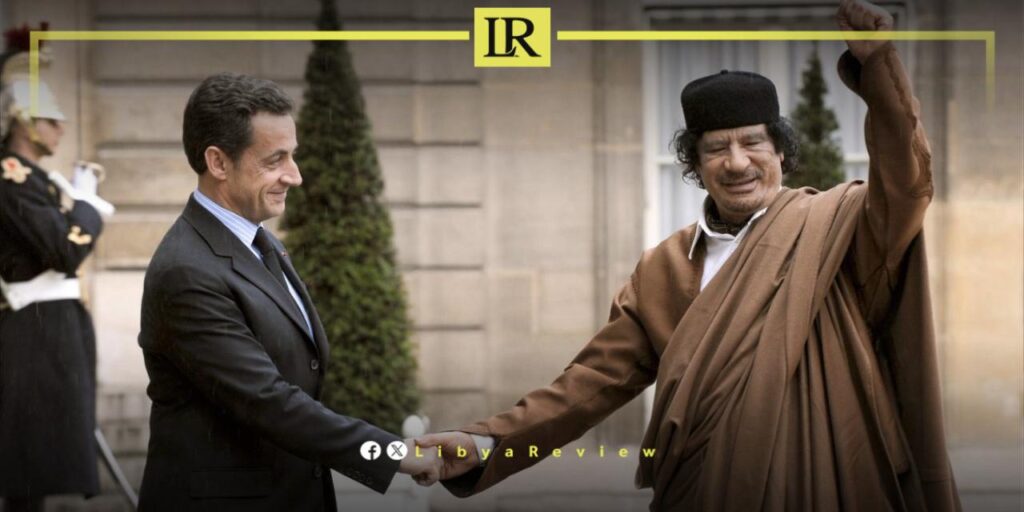
Former French President Nicolas Sarkozy faces a defining moment in his political career as his lawyers prepare to deliver final arguments in the appeal trial over allegations that Libya secretly financed his successful 2007 presidential campaign.
Sarkozy, one of ten defendants in the long-running case before the Paris Court of Appeal, has repeatedly denied receiving any funds from the regime of late Libyan leader Muammar Gaddafi. He insisted throughout the hearings that “not a single cent” of Libyan money was used to support his election campaign.
The 71-year-old former president also rejected accusations that he entered into any political agreement with Libyan officials in exchange for financial support. Prosecutors allege Sarkozy participated in a corruption pact involving Libyan state funds and promised political favours to senior figures in Tripoli.
A key element of the case concerns allegations linked to Abdullah Senoussi, the former Libyan intelligence chief and brother-in-law of Gaddafi. Sarkozy denies intervening on Senoussi’s behalf after the latter was sentenced in France over the 1989 bombing of a UTA passenger aircraft above Niger, which killed 170 people, including 54 French nationals.
French prosecutors are seeking a seven-year prison sentence for Sarkozy on charges including corruption, illegal campaign financing, concealment of embezzled Libyan public funds, and criminal conspiracy.
The appeal trial has also exposed tensions within Sarkozy’s former inner circle. Claude Guéant, once considered one of Sarkozy’s closest political allies, reportedly told the court he informed Sarkozy about a private 2005 meeting with Senoussi, an encounter investigators view as central to the alleged Libya agreement.
The final ruling is expected on 30 November and could significantly shape Sarkozy’s political legacy. An acquittal would allow the former president to claim vindication after years of legal battles, while a conviction would deepen the legal troubles that have already overshadowed his presidency.
The case remains one of the most high-profile political corruption trials linked to Libya in modern French history.

