
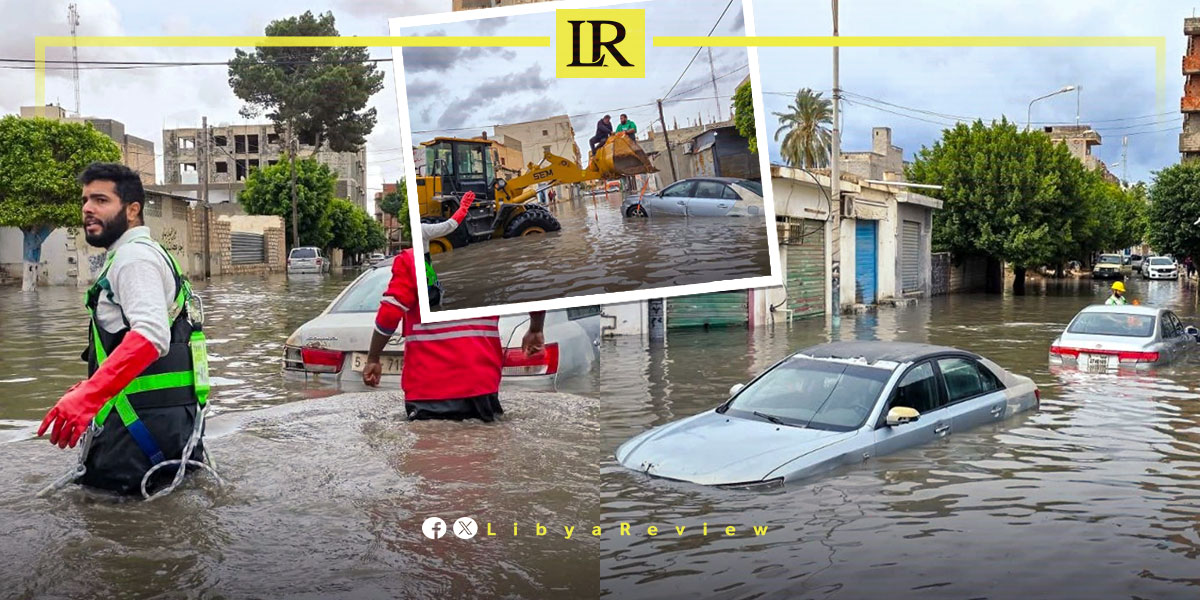
Heavy rainfall and severe weather conditions in southwestern Libya have triggered an emergency humanitarian response, as the Libyan Red Crescent moved to support families displaced by flooding in the municipality of Tehala.
Rescue and emergency teams from the organization’s Ghat branch began urgent field operations after intense rainstorms struck the area on Wednesday evening, causing flooding in residential neighborhoods and forcing several families to evacuate their homes.
According to the Libyan Red Crescent, emergency crews worked to prepare temporary shelters and camps for displaced residents while distributing essential humanitarian supplies and monitoring the safety of affected families.
Field teams also carried out rapid assessments to identify urgent needs and coordinate additional assistance if conditions worsen.
The emergency response comes as Libya’s National Center of Meteorology warned that rainfall is expected to continue across parts of southwestern Libya, raising the risk of flash floods, overflowing valleys, and further damage in vulnerable communities.
Local reports indicated that low-lying residential areas in Tehala were among the hardest hit by the severe weather, with floodwaters forcing residents to leave their homes as conditions rapidly deteriorated.
At the same time, the Higher Emergency Committee at the Ministry of Health raised preparedness levels in hospitals and medical facilities across the region in anticipation of possible injuries or additional emergencies linked to the unstable weather conditions.
Observers say the latest flooding highlights the ongoing challenges faced by southern Libyan communities during seasonal storms, particularly in areas with limited infrastructure, weak drainage systems, and difficult access to emergency services.
Humanitarian teams and local authorities remain on high alert as weather conditions continue to threaten parts of the region. Officials emphasized the importance of rapid coordination between emergency agencies and local institutions to ensure that aid reaches affected communities as quickly as possible.

