
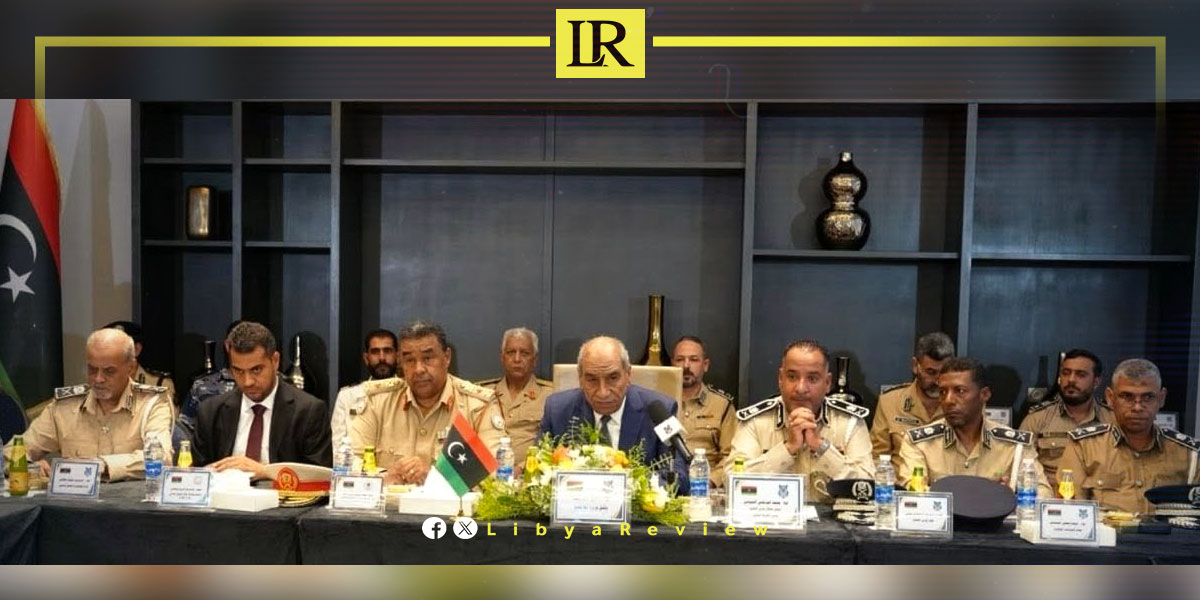
Tripoli hosted a trilateral security meeting on Tuesday between Libya, Algeria, and Tunisia as part of efforts to strengthen cooperation on border security, combat smuggling, and address irregular migration across North Africa.
The meeting was the second session of the Libyan-Algerian-Tunisian working group responsible for securing the shared borders between the three countries. It focused on improving security coordination and developing practical mechanisms to respond to growing cross-border threats.
According to the Ministry of Interior of the Government of National Unity, the talks covered several security files, including border protection, organised crime, counter-terrorism, smuggling networks, and irregular migration. The ministry said the discussions aimed to support regional stability and protect the common interests of Libya, Algeria, and Tunisia.
The meeting was opened by Major General Mahmoud Saeed, Undersecretary of the Ministry of Interior for Public Affairs. He welcomed the participating delegations and stressed the need to unify efforts and strengthen field coordination between the three neighbouring countries.
Saeed said closer cooperation was necessary to confront rising security challenges in the region, particularly those linked to porous borders, trafficking routes, and the movement of criminal networks.
Participants also underlined the importance of continued information-sharing and the exchange of security expertise. They said better coordination would help raise operational readiness and improve the effectiveness of measures designed to protect the shared borders.
The Tripoli meeting comes as Libya, Algeria, and Tunisia continue to face common security challenges linked to smuggling, organised crime, terrorism, and irregular migration. Libya’s long land borders and its position as a transit route for migrants have made border control a major priority for the country and its neighbours.
The three countries have held a series of joint security meetings aimed at building a stronger regional partnership and improving coordination against threats that cannot be addressed by one country alone.
The latest meeting reflects growing efforts to create a more coordinated North African security approach, with a focus on practical cooperation, intelligence-sharing, and joint action to reduce cross-border crime and strengthen regional stability.

