
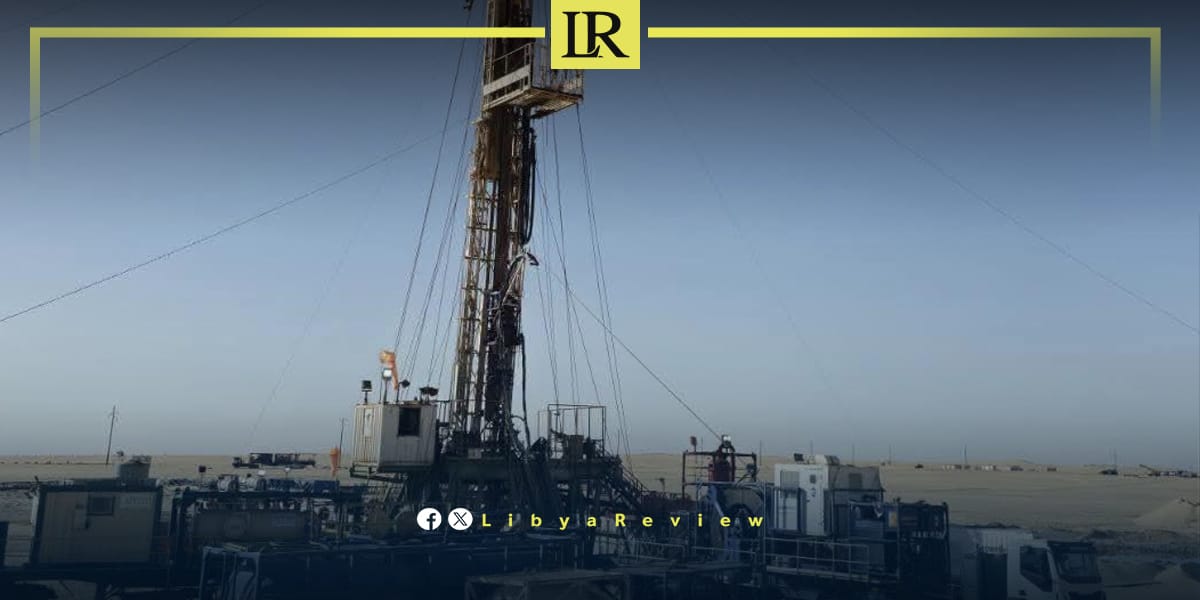
Libya’s National Oil Corporation (NOC) has announced the successful completion of a new development well at the Al-Khair field operated by the Sirte Oil and Gas Production and Manufacturing Company, marking another step in efforts to increase the country’s oil production capacity.
According to the NOC, the development well, designated A9-LP3D, reached its planned total depth of 9,050 feet. Drilling operations targeted the Lidam reservoir, which was encountered at a depth of 8,789 feet with a reservoir thickness of 174 feet.
Initial testing results showed that the well achieved natural flow without the need for artificial lift systems. Production rates increased progressively as choke sizes were expanded during testing, ultimately reaching a production rate of 3,209 barrels of oil per day.
The well also produced 1.948 million cubic feet of associated gas per day. No water was recorded during testing, while the crude oil achieved a quality rating of 40.2 degrees API, indicating a high-quality light crude.
The NOC described the results as highly encouraging, saying they confirm the success of the drilling programme and the accuracy of reservoir targeting. The corporation added that the well demonstrated stable natural flow and strong production potential, which could contribute to increasing output from the Al-Khair field and supporting broader production growth plans.
Sirte Oil Company began drilling the development well on 14 April using the Fayad Burgan No. 8 drilling rig. The project forms part of the company’s strategy to maintain production levels, enhance field productivity and develop recoverable reserves.
The initiative is also aligned with the NOC’s wider strategy to raise Libya’s oil production and compensate for resource depletion through continued investment in field development and exploration activities.
NOC Chairman Masoud Suleman praised the achievement, commending the efforts of Libyan engineers and workers at Sirte Oil Company. He said the accomplishment reflects the sector’s commitment to increasing production, supporting economic growth and advancing the development of Libya’s energy industry.

