
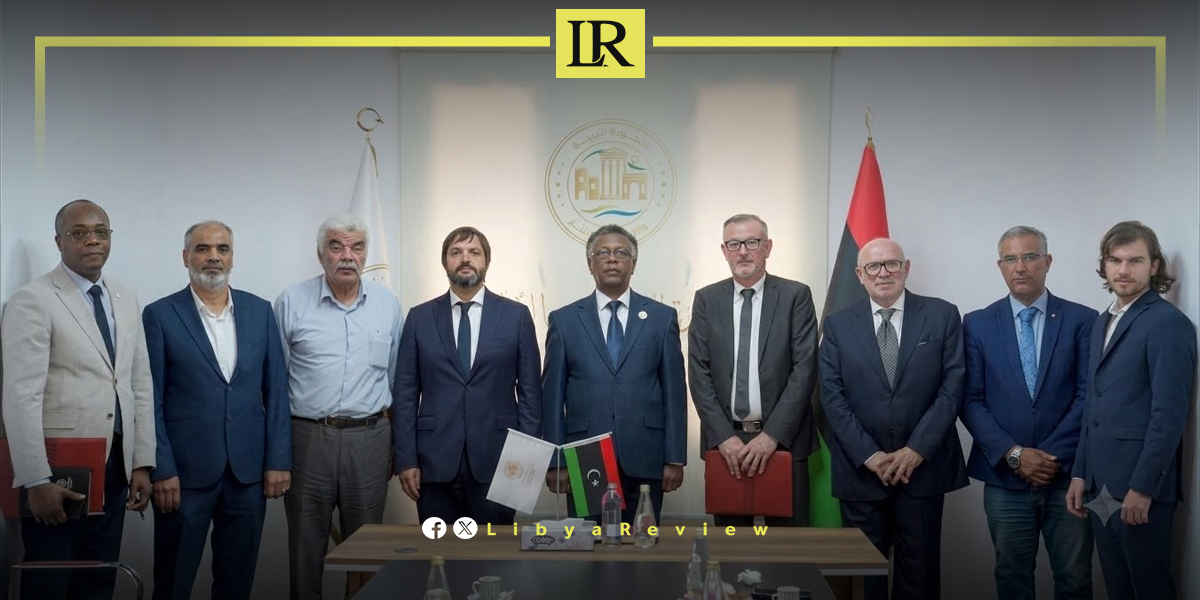

The Libyan East Government, headed by Prime Minister Osama Hammad, has signed a memorandum of understanding with Italian company FIMA to strengthen cooperation in the restoration and preservation of the country’s archaeological heritage while expanding collaboration in tourism development, technical training, and cultural preservation.
The agreement was signed by the Ministry of Tourism and Antiquities of the Libyan East Government and establishes a strategic framework for cooperation in restoring archaeological sites, preserving historic landmarks, enhancing museum management, and improving the technical and professional capabilities of Libyan specialists working in the tourism and heritage sectors.
According to the ministry, the partnership also covers technical and engineering consultancy, scientific archaeological excavations, tourism promotion, and the introduction of modern technologies for documenting, digitizing, and archiving archaeological sites and cultural landmarks.
The initiative aims to strengthen Libya’s ability to preserve its rich historical heritage while adopting internationally recognized standards in conservation and restoration.
Minister of Tourism and Antiquities Ali Qalma said that Libya possesses exceptional archaeological and tourism resources that could make the sector one of the country’s most important drivers of economic growth and diversification.
He noted that developing tourism would help increase national income, create employment opportunities, and attract greater domestic and foreign investment.
Qalma stressed that despite the challenges facing the tourism sector, the ministry remains committed to implementing development programs and expanding cooperation with international partners capable of providing technical expertise and advanced restoration technologies.
He announced that implementation of the agreement will begin immediately through specialized training programs designed to transfer Italian expertise to Libyan engineers, archaeologists, and technical personnel.
Some of the training courses will be held in Libya, while others will take place in Italy, allowing participants to receive advanced practical instruction in archaeological restoration, museum management, heritage conservation, and modern preservation techniques.
The minister said the partnership reflects the government’s commitment to protecting Libya’s archaeological legacy while modernizing the tourism sector and strengthening institutional capacities.