
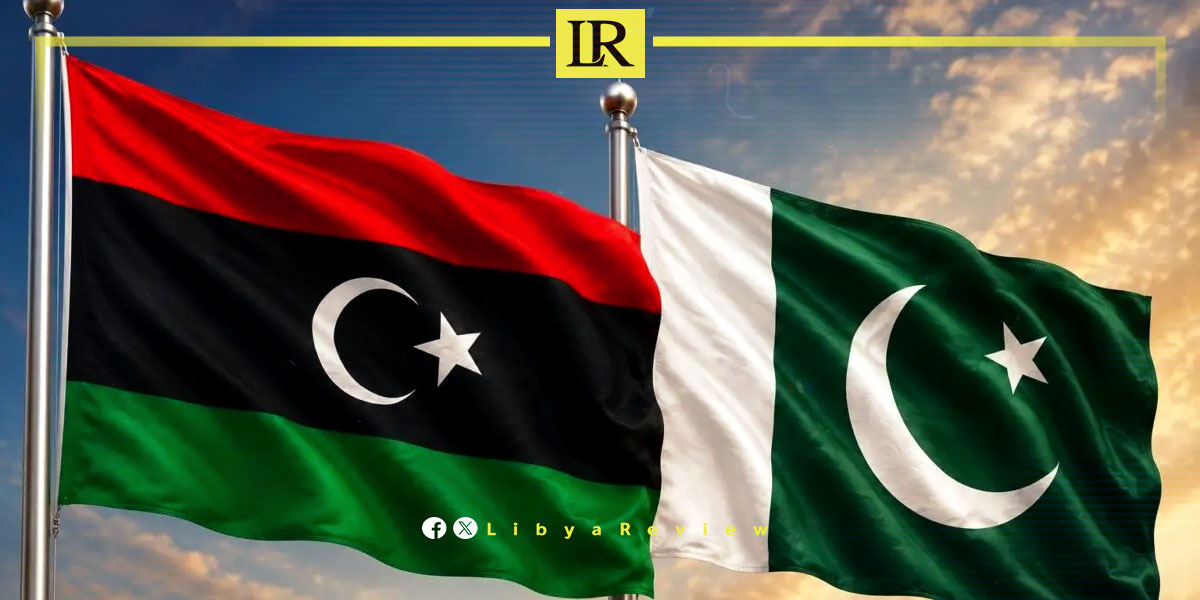
Reports that Pakistan could play a diplomatic role in Libya have sparked debate over whether Islamabad can help advance the country’s stalled political process amid competing regional and international interests.
Political analysts believe Pakistan’s potential involvement would not focus on mediating directly between Libya’s rival factions.
Instead, they suggest its role could be to facilitate dialogue between supporters of the current US-backed political initiative and other international stakeholders whose support will be essential for any future settlement.
In statements to Sputnik, Libyan political analyst Ibrahim Belgasem said that the main Libyan parties involved in the current initiative already view themselves as beneficiaries of the process and are primarily negotiating technical and procedural issues rather than seeking a traditional mediator.
Belgasem argued that Pakistan’s growing reputation as a regional diplomatic actor makes it a suitable candidate to support international efforts on Libya.
He pointed to Islamabad’s increasing participation in mediation initiatives across the Middle East and South Asia, saying this experience could help generate renewed international attention for Libya at a time when global priorities have shifted toward other regional crises.
He also suggested that the United States may have encouraged Pakistan’s involvement, while Saudi Arabia could support such a role because of its close relationship with Islamabad. However, Belgasem noted that the current US initiative has yet to receive broad international backing, with several international partners still assessing its prospects.
Asia Al-Shuwaihdi, a member of Libya’s National Reconciliation Track within the Structured Dialogue, offered a similar assessment.
She told Sputnik that Pakistan has previously contributed to managing complex regional issues and could play a constructive role in Libya if supported by key regional and international partners.
According to Al-Shuwaihdi, any Pakistani initiative would likely receive backing from the US and regional powers, including Egypt, Turkey, Saudi Arabia, and Qatar. Such support, she said, could strengthen Pakistan’s ability to facilitate dialogue and encourage broader consensus around Libya’s political process.
Pakistan and Libya also share decades of bilateral relations dating back to the 1950s, including cooperation in labor, education, and defense.
Analysts believe these longstanding ties, together with Pakistan’s position within the Islamic world, could make it an acceptable diplomatic partner for various Libyan stakeholders if international and regional support for such a role continues to grow.
Whether Pakistan ultimately assumes a meaningful role remains uncertain, but the discussion reflects continuing international efforts to identify new avenues for advancing Libya’s political process and encouraging broader consensus among domestic and international actors.

