
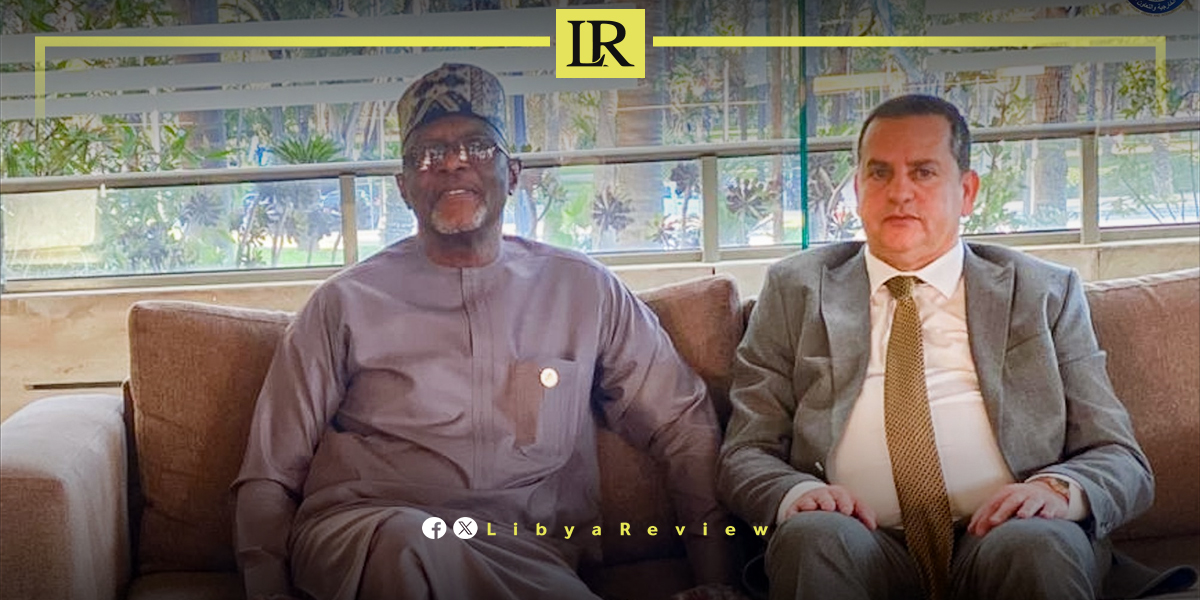
Niger has officially announced the establishment of two new consulates in the Libyan cities of Benghazi and Sebha, a diplomatic expansion that reflects growing cooperation between the two neighbouring states.
The decision was confirmed by Niger’s Minister of Foreign Affairs, Bakary Sangaré, during his meeting with Libya’s Minister of Foreign Affairs and International Cooperation, Abdelhadi Al-Hwaij.
The announcement was made on the sidelines of the MEDays International Forum in Tangier, a major annual gathering that brings together African and European leaders, senior officials, and policy experts.
This year’s forum, held under the theme “Divisions and Polarization: Reinventing the Global Equation,” provided a platform for Libya and Niger to discuss shared regional priorities and the importance of reinforcing diplomatic channels in North Africa and the Sahel.
Minister Al-Hwaij welcomed Niger’s decision, noting that the opening of the two consulates underscores the strength of bilateral relations and reflects Niger’s intent to expand its diplomatic and consular footprint in Libya. He emphasized that the new offices will significantly improve services for Nigerien nationals, facilitate administrative processes, and support commercial and humanitarian coordination between the two countries.
For Niger, selecting Benghazi and Sebha carries strategic weight. Benghazi, the principal city of eastern Libya, is a vital political, economic, and administrative centre, while Sebha serves as the main hub of southern Libya and a gateway to the Sahel.
Both locations are deeply connected to Niger through trade routes, migration flows, and cross-border communities. Strengthening consular services in these areas will help address long-standing challenges faced by migrants, traders, and workers who move between the two countries.
During the meeting, both ministers reaffirmed their commitment to intensifying cooperation in political, economic, and social fields. They highlighted the importance of coordinated efforts to enhance regional stability, improve border management, and strengthen ties across the Sahel–Libya corridor.
The officials agreed that expanding diplomatic engagement is essential to addressing shared challenges and supporting the interests of both the Libyan and Nigerien peoples.

