
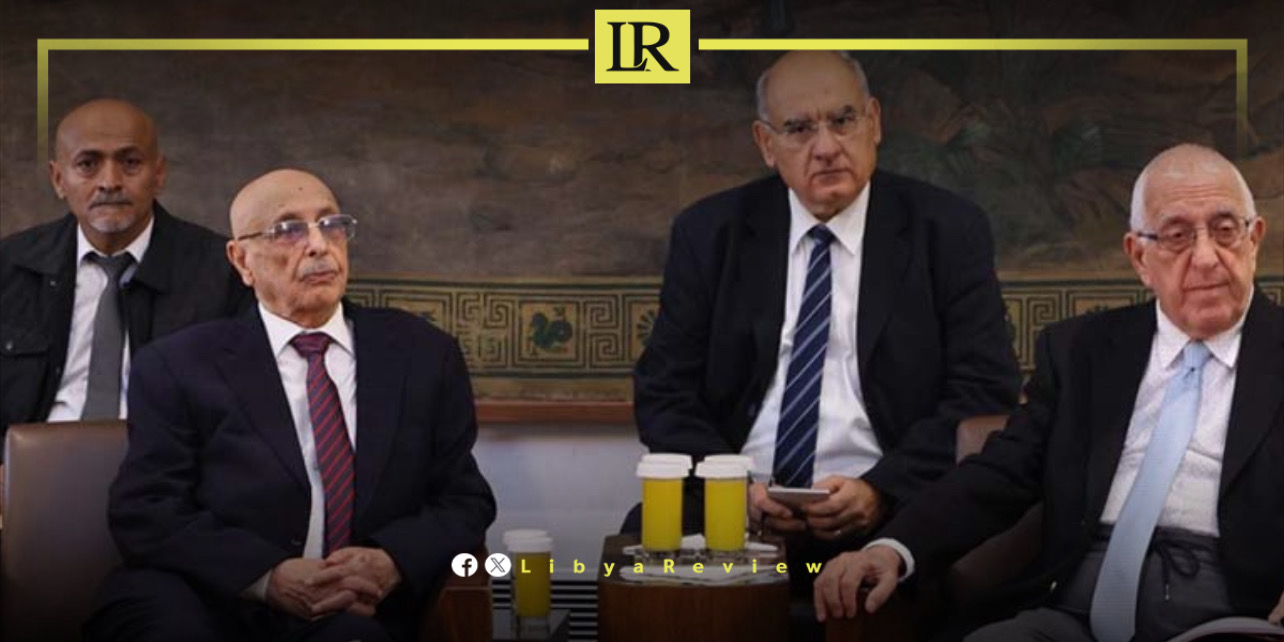
Greece has renewed its strong opposition to the 2019 Turkish-Libyan Memorandum of Understanding, with the Speaker of the Hellenic Parliament, Nikitas Kaklamanis, calling for the agreement to be completely annulled.
His statements came during a meeting in Athens with the Speaker of Libya’s House of Representatives, Ageela Saleh, who was received as a key regional partner whose position carries weight in shaping Libya’s foreign engagements.
During the meeting, Kaklamanis emphasized Greece’s interest in restoring a close and transparent dialogue with Libya’s elected legislature.
He said that Athens views Saleh as a long-standing friend and an essential figure for strengthening parliamentary cooperation between the two countries. The Greek speaker underlined that both sides share mutual interests in ensuring stability in the Mediterranean and upholding principles of international law.
Kaklamanis stated that Libya’s Parliament must refrain from ratifying the 2019 Turkish-Libyan maritime memorandum, arguing that the agreement contradicts internationally recognized maritime boundaries and lacks legal validity.
He insisted that the memorandum should eventually be abolished entirely, asserting that its cancellation would protect Libya’s sovereignty and reinforce its legitimate maritime rights. He added that removing the agreement serves Libyan interests first, even before it benefits Greece.
The Greek speaker also expressed appreciation for Ageela Saleh’s firm stance on the issue, particularly his letter to the UN Secretary-General urging the organization to reject the memorandum. Kaklamanis praised Saleh for defending Libya’s legal and territorial rights, describing his approach as principled and aligned with international norms.
The meeting comes at a time when Libya’s House of Representatives seeks to expand diplomatic engagement and clarify the country’s foreign commitments, especially agreements signed by previous administrations without parliamentary approval. For many Libyan lawmakers, the 2019 memorandum is considered illegitimate and inconsistent with Libya’s long-term national interests.

