
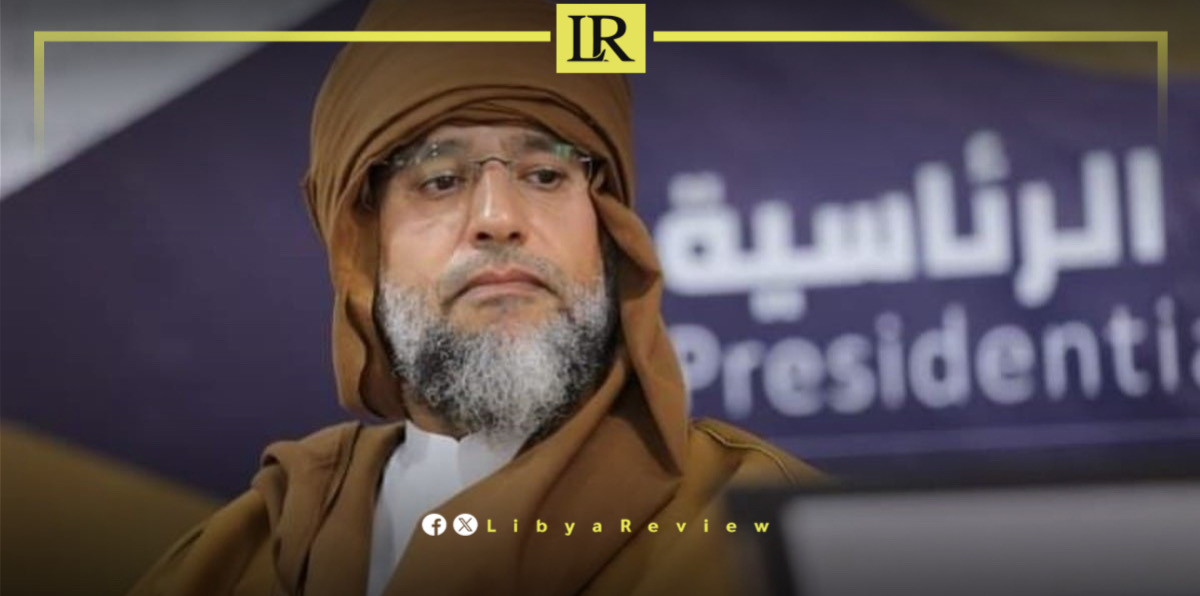
A recent analysis published by the UK-based think tank Chatham House examines the political implications that would follow the killing of Saif al-Islam Gaddafi, arguing that his removal from Libya’s political scene would mark the end of a distinct era without fundamentally altering the country’s balance of power.
The article argues that Saif al-Islam represented a latent political and security threat to Libya’s rival power centers despite having limited direct influence over events in recent years. According to the analysis, both Libya’s Government of National Unity in Tripoli and the eastern-based forces led by Khalifa Haftar would stand to benefit politically from his disappearance.
Eaton notes that Saif al-Islam was widely seen as the only figure capable of unifying constituencies loyal to the former regime, often referred to as the “Green current,” which spans cities such as Sirte, Bani Walid, and Sebha, as well as elements within former security and political elites. These groups have historically oscillated between alignment with eastern authorities or engagement with institutions in Tripoli.
The analysis recalls Saif al-Islam’s brief re-emergence in 2021, when his registration as a presidential candidate sent shockwaves through Libya’s political landscape. Despite lacking an organized political base, his candidacy fueled fears among rivals that he could mobilize both former regime supporters and voters frustrated with the post-2011 status quo. Chatham House suggests this fear was one of the factors contributing to the indefinite postponement of Libya’s elections.
The report also highlights concerns within eastern Libya, where former regime loyalists constitute a significant component of the military coalition. Saif al-Islam’s potential return was viewed as a long-term challenge to internal cohesion, particularly in any future succession scenario.
Ultimately, the analysis concludes that while his removal would reduce political uncertainty, it would likely reinforce existing patterns of power consolidation rather than produce meaningful change, leaving Libya’s core political dynamics largely intact.

