
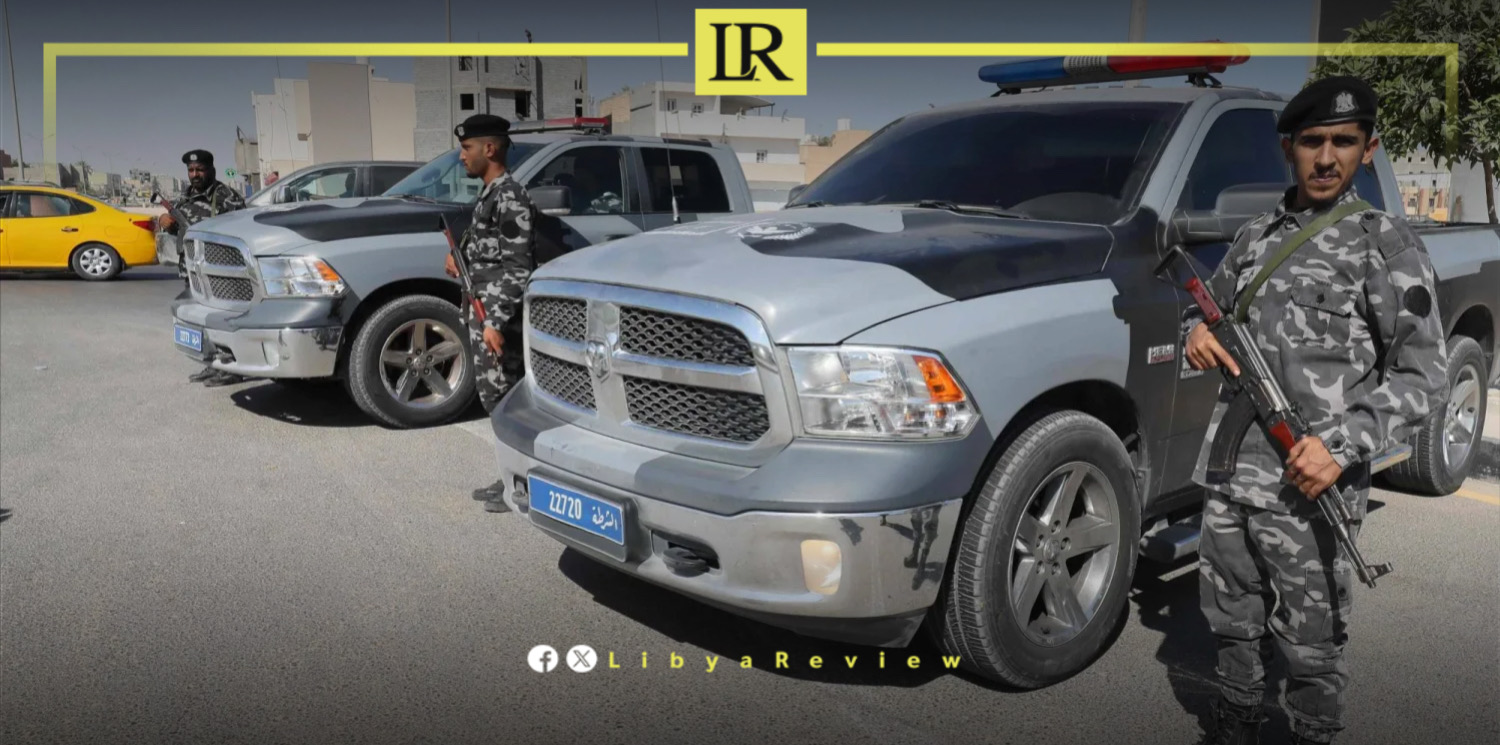

Libya’s capital, Tripoli, witnessed renewed security tensions late Tuesday and into the early hours of Wednesday after armed formations affiliated with authorities in western Libya deployed across several parts of the city, raising fears among residents of a possible return to armed confrontations.
The military movements took place without any official statement from the Presidential Council or the Government of National Unity explaining the purpose of the deployments or the reasons behind the increased security activity.
According to local sources, eyewitnesses, and videos circulating on social media, the armed deployments were concentrated around the Al-Mansoura district near the state radio building. The forces reportedly included units from the Counter-Terrorism Force, commanded by Major General Mokhtar Al-Jahawi and affiliated with the General Staff under the Government of National Unity, alongside patrols from the 222nd Brigade led by Hussein Al-Shawat.
Videos shared online showed large numbers of military vehicles and armed personnel moving through major streets, while residents reported hearing sporadic gunfire in several neighborhoods. The developments prompted many people to remain indoors amid concerns that the situation could escalate into violence similar to the clashes that have periodically shaken the capital.
The National Institution for Human Rights in Libya expressed concern over what it described as growing security tensions and military mobilization accompanied by indiscriminate gunfire, warning that such actions had frightened civilians and placed residential areas at risk. The organization urged all parties to exercise restraint, avoid the use of force, and prevent any confrontation that could endanger civilian lives. It also warned that violations of international humanitarian law could expose those responsible to legal accountability.
The developments come as uncertainty continues to surround reports that a planned meeting in Sirte between Libyan National Army Deputy Commander Saddam Haftar and Government of National Unity Deputy Defense Minister Abdul Salam Al-Zoubi has been postponed. The meeting was reportedly part of a US-backed initiative aimed at promoting dialogue between military institutions in eastern and western Libya.
Neither Libyan nor US officials have commented on the reported postponement. The latest developments once again highlight the fragile security situation in western Libya, where the continued presence of rival armed groups remains one of the country’s most significant challenges despite ongoing international efforts to advance a comprehensive political and military settlement.