
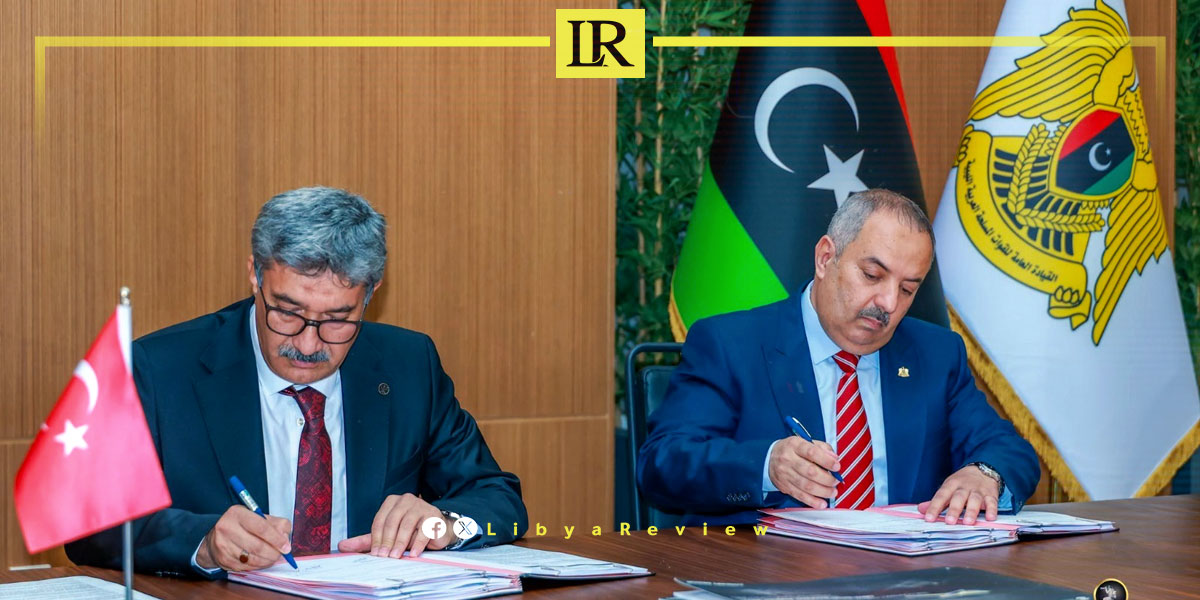
The General Command of the Libyan National Army (LNA) has signed a contract with a Turkish company to implement the first phase of an integrated land border management and surveillance project, a major initiative aimed at strengthening border security, combating transnational crime, and enhancing the country’s ability to monitor its extensive frontiers.
The agreement was announced on Monday by the General Command’s Military Media Division in Benghazi, which said the project forms part of the General Command’s Vision 2030 and is being carried out under the supervision of Deputy Commander-in-Chief Lieutenant General Saddam Haftar.
According to the statement, the first phase of the project will cover 275 kilometers of Libya’s land borders. Officials described the initiative as a strategic step reflecting the General Command’s commitment to safeguarding Libya’s sovereignty and improving control over one of the country’s most critical security files.
The integrated border management system is intended to strengthen surveillance capabilities along Libya’s frontiers with neighboring countries while improving the state’s capacity to detect and respond to cross-border threats. Authorities said the project will also contribute to greater coordination between security institutions responsible for border protection.
The General Command said the project is designed to combat a wide range of security challenges, including human smuggling, irregular migration, drug trafficking, weapons smuggling, organized crime, and other forms of cross-border criminal activity. Officials stressed that protecting Libya’s borders remains a national priority essential to preserving security and territorial integrity.
While announcing the agreement, the Military Media Division did not disclose the identity of the Turkish company selected to implement the project. It also provided no details regarding the contract’s value, the technologies to be deployed, or the expected completion timeline.
Libya shares thousands of kilometers of land borders with Egypt, Sudan, Chad, Niger, Algeria, and Tunisia, making border security one of the country’s most significant long-term challenges. Authorities have repeatedly highlighted the need for modern surveillance systems to improve monitoring across remote desert regions frequently used by smugglers and trafficking networks.
The border management project is one of several infrastructure and security initiatives launched under Vision 2030, which seeks to strengthen state institutions, improve national security capabilities, and modernize critical infrastructure.

