
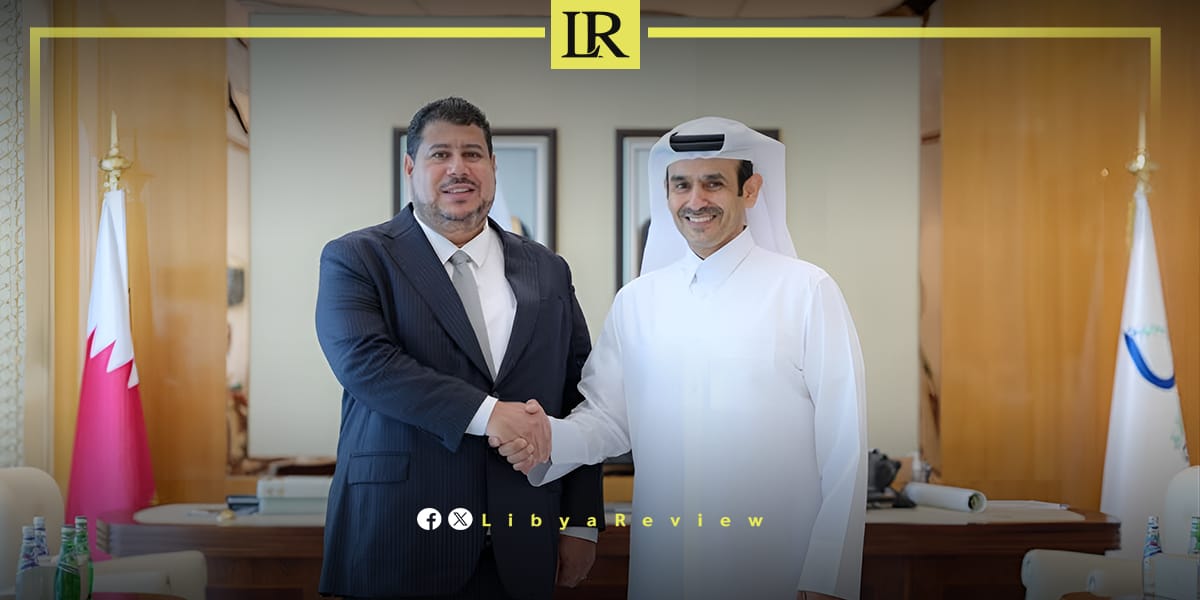
The Chairman of Libya’s National Oil Corporation (NOC), Masoud Suleiman, took part in the Doha Forum, where global policymakers and energy leaders gathered to discuss international cooperation, energy transitions and development strategies. The Libyan delegation’s participation underscored the country’s intent to reinforce its role within global energy markets and expand foreign partnerships in oil and gas development.
On the sidelines of the forum, Suleiman held a high-level meeting with Qatar’s Minister of State for Energy Affairs and CEO of QatarEnergy, Saad Al-Kaabi. The two sides reviewed prospects for advancing bilateral cooperation in the energy sector, focusing on upstream investment opportunities and the possibility of launching joint development programmes across exploration, production and infrastructure modernisation.
The talks also covered Libya’s new licensing round, which the NOC considers a cornerstone in its strategy to attract major global operators after years of limited foreign engagement. Suleiman emphasised that the round presents viable offshore and onshore blocks with competitive geological potential, positioning Libya to increase production capacity over the coming years and diversify partnerships beyond its traditional European and American counterparts.
Technical cooperation, data exchange, and shared expertise were highlighted as key areas for expansion, particularly in offshore drilling, gas monetisation and renewables integration. Both parties stressed the importance of energy security and market stability amid shifting geopolitical and economic pressures in the wider Middle East and North Africa region.
At the conclusion of their meeting, Suleiman and Al-Kaabi reaffirmed their commitment to deepening cooperation mechanisms, exploring new avenues of investment, and supporting sustainable development tracks aligned with global climate considerations. The NOC Chairman reiterated Libya’s readiness to collaborate with experienced international firms to enhance production efficiency, strengthen institutional capacity and reinforce the country’s position within the international energy map.

