
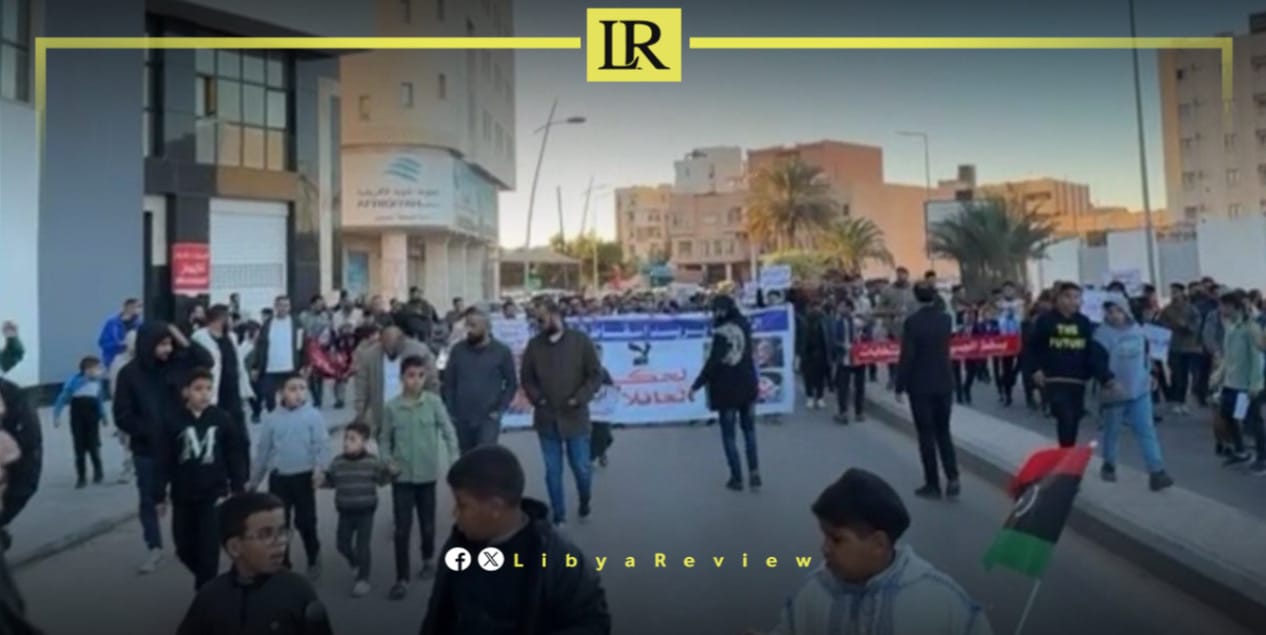
Libyan cities witnessed fresh public protests after demonstrations broke out in Zawiya and Misrata, reflecting growing frustration with the country’s prolonged political and economic crisis. The rallies highlighted mounting public pressure on rival authorities amid continued institutional paralysis and deteriorating living conditions.
In Zawiya, demonstrators gathered to demand the resignation of the Government of National Unity led by Abdulhamid Dbaiba. Protesters chanted slogans condemning what they described as worsening economic hardship, rising prices, and entrenched corruption.
Participants accused the authorities of failing to deliver tangible improvements to daily life, despite repeated promises of reform and stability.
Meanwhile, in Misrata, protesters adopted a broader political message. Demonstrators called for the dismantling of all existing political bodies in both eastern and western Libya, arguing that the persistence of divided institutions has deepened the national crisis.
Slogans emphasised rejection of the entire political class, with protesters warning that continued power struggles are obstructing any comprehensive solution to Libya’s long-running instability.
The demonstrations come at a time of sustained political deadlock, with Libya remaining split between rival administrations and competing legislative bodies. Efforts to advance a unified political process, including steps towards national elections, have repeatedly stalled due to disagreements over legal frameworks, executive authority, and security arrangements.
Economic pressures continue to fuel public anger. Many Libyans are struggling with high living costs, unreliable public services, and uncertainty over the country’s financial future, despite Libya’s vast natural resources.
Popular protests have become a recurring feature of Libya’s political landscape, often intensifying during periods of stalled negotiations and declining trust in governing institutions.

