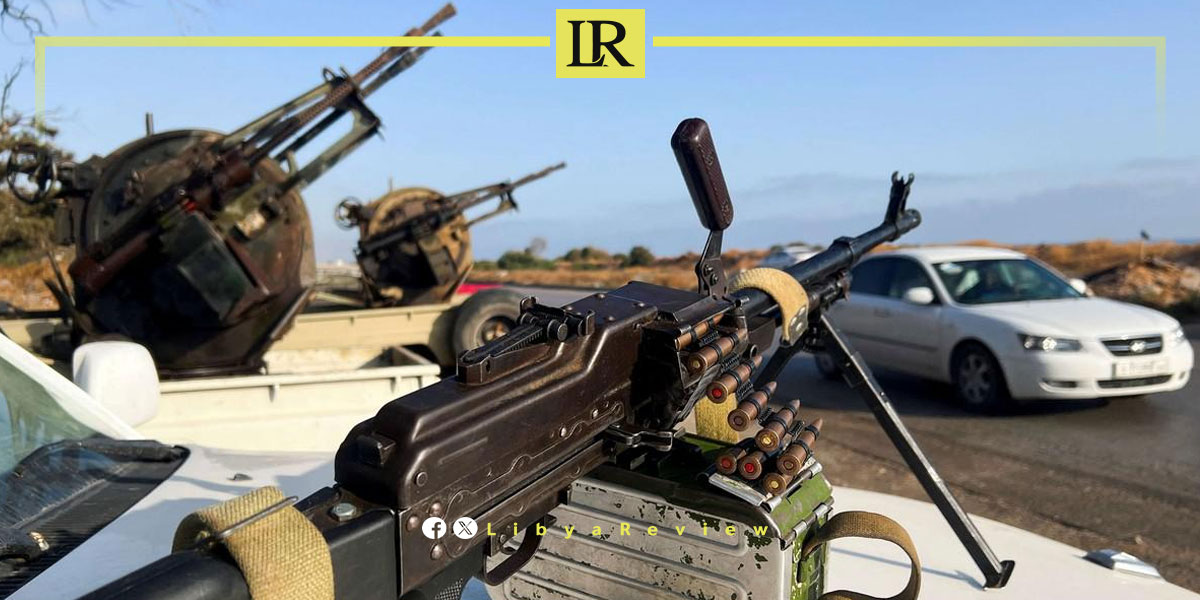
A French investigative report has warned that Libya’s prolonged instability has evolved into something far more dangerous than a temporary political crisis, arguing that the country has effectively become a laboratory for a failed state governed by militias rather than institutions. According to Courrier International, Libya’s disorder is no longer transitional but has hardened into a durable system that reshapes power, governance, and legitimacy.
The report describes a political environment in which the struggle is no longer about who governs Libya, but about redefining what governance itself means. In western Libya, particularly in Tripoli, the boundaries between the state, armed groups, and criminal networks have largely collapsed. The capital is portrayed as a patchwork of territories controlled by rival militias, each exercising authority over security, resources, and daily life.
Rather than enforcing sovereignty, authorities in western Libya are depicted as actors who rely on financial arrangements with armed groups to remain in place. Militias, the report argues, have replaced the rule of law with a logic of force, deriving legitimacy from territorial control rather than public consent. Strategic infrastructure, including oil fields, ports, and refineries, has become a source of power in the hands of militia leaders whose influence often exceeds that of formal state institutions.
The report highlights a shift in the nature of conflict from open warfare to what it calls “the power of obstruction,” where armed groups exert leverage by disrupting oil production and essential services. Libya’s oil wealth, once a unifying national resource, is now described as a hostage used to extract political and financial concessions.
International actors are also criticized for reinforcing this system. European migration deals, according to the report, have empowered militias by granting them financial resources and implicit recognition as security partners. Meanwhile, regional powers are accused of managing Libya’s chaos rather than resolving it, turning armed factions into proxies competing over influence and resources.
Elections, the report concludes, are widely seen as a means of postponing confrontation rather than resolving it, with many actors believing that force will ultimately determine outcomes. As militias consolidate control, ordinary Libyans bear the cost through fuel shortages, rising food prices, and the collapse of public trust. The report ultimately argues that Libya is no longer simply a country in crisis, but a state where disorder has become institutionalized.


