
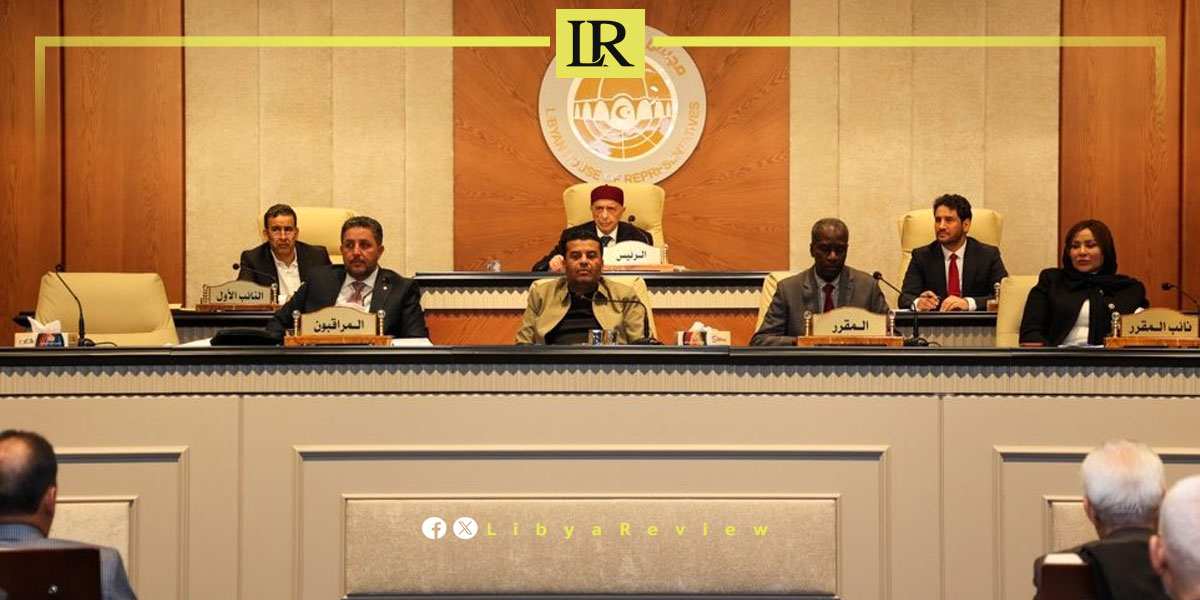
On Monday, Libya’s House of Representatives approved the formation of a specialized technical committee tasked with communicating directly with the Governor of the Central Bank of Libya, Naji Issa, amid growing parliamentary concern over cash shortages and broader monetary challenges facing the country.
The decision was adopted during a parliamentary session held today, where lawmakers voted in favor of establishing the committee as a formal channel of engagement with the Central Bank.
According to Ageela Saleh, the Speaker of the House of Representatives, the committee will compile and submit questions raised by MPs to the Central Bank governor ahead of a forthcoming session. Saleh said the aim is to ensure structured dialogue and clarity on key financial issues affecting citizens.
Although no detailed mandate for the committee was announced, the parliamentary debate largely focused on the ongoing liquidity crisis, which continues to limit access to cash across Libya. MPs warned that the situation could worsen in the coming weeks, particularly with the approach of the holy month of Ramadan, when household expenditures typically rise. Several lawmakers described the cash shortage as a serious threat to social stability, stressing that citizens are struggling to meet daily needs despite funds being available in bank accounts.
Saleh also noted that all officials invited to attend Monday’s session had formally apologized and requested to postpone their appearance until the next parliamentary meeting. He suggested that the House could meanwhile proceed with other legislative matters, including discussions on the draft anti-money laundering law, while preparing questions for the Central Bank governor.
Political tensions surfaced during the session as well. MP Jalal Al-Shuwaihdi criticised the role of the United Nations Support Mission in Libya, arguing that it played a key role in bringing the current Government of National Unity to power and should now help facilitate the transition toward a new, unified government capable of addressing Libya’s institutional deadlock.

