
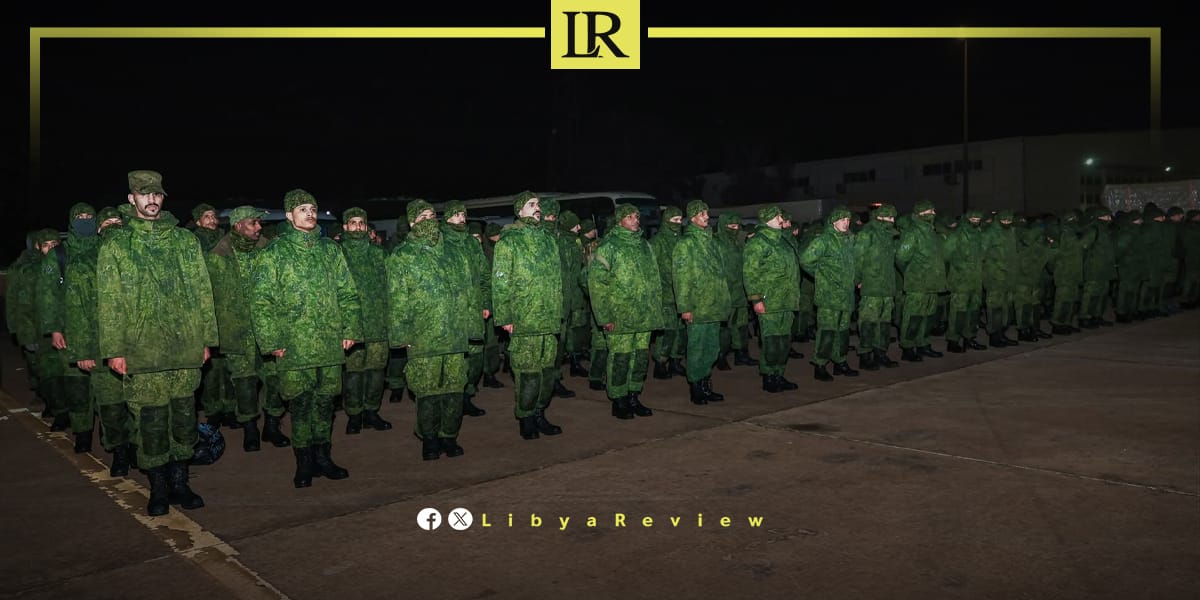
The Libyan National Army (LNA) said on Monday that members of the 166th Infantry Brigade had completed advanced military training in Belarus and returned to Libya after finishing an intensive specialised programme.
In a statement posted on its official Facebook page, the brigade said the training covered counter-terrorism operations, infiltration behind enemy lines, hostage rescue, building assault techniques, and the execution of special operations, as part of a broader plan to enhance combat readiness and operational efficiency.
The unit said the programme aimed to develop tactical skills, discipline, and coordination among its personnel, amid ongoing efforts by the LNA to modernise its forces and strengthen professional training standards.
The announcement comes amid expanding security and military cooperation between Libya’s eastern authorities and Belarus. On 11 November last year, a Belarusian security delegation visited the Higher Institute for Security and Legal Studies in Benghazi, where it reviewed student conditions and academic curricula.
Earlier, on 21 October, Belarusian President Alexander Lukashenko received Lieutenant General Saddam Haftar, deputy commander-in-chief of the General Command, at the presidential palace in Minsk. The meeting focused on strengthening bilateral cooperation, including security and military coordination, according to Libyan and Belarusian statements at the time.
In a related development, the LNA’s War Media Division said in early September that a new batch of fighters from the 87th Rapid Intervention Battalion had graduated after completing advanced training courses in Belarus. The programme reportedly lasted more than a year and included specialised field exercises.
Observers say the growing cooperation reflects the LNA’s efforts to diversify international training partnerships and improve the capabilities of its units, particularly in counter-terrorism and rapid response operations. The LNA has repeatedly said such programmes are intended to bolster stability and security across eastern and southern Libya, amid persistent security challenges and regional instability nationwide efforts.

