
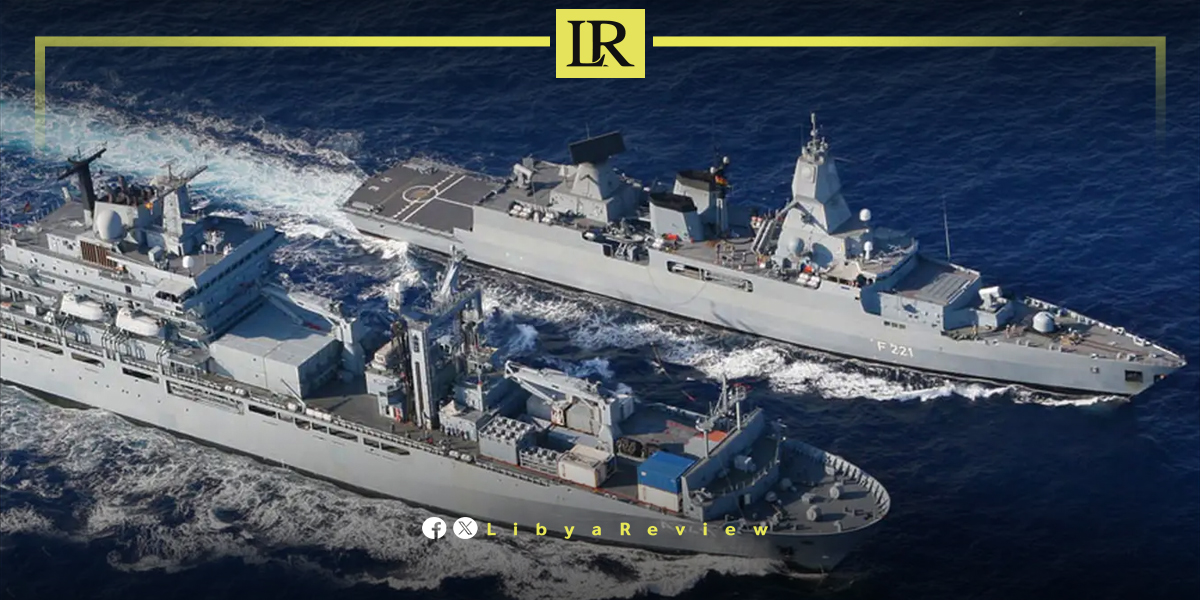
The United Nations Security Council has decided not to renew the legal mandate underpinning the European Union naval mission “Irini” operating off the Libyan coast, marking a significant shift in the future role of the Mediterranean operation.
According to reports, Security Council members agreed that the mission could continue operating beyond 25 May, but without a renewed UN authorization allowing inspections of vessels suspected of violating the international arms embargo on Libya.
The development was first reported by the Greek newspaper Kathimerini, which stated that Greece and France — the two countries that drafted UN Security Council Resolution 2292 in 2016 authorizing maritime inspections off Libya — did not seek an extension of the annual mandate before its expiration.
The move follows extensive internal discussions within the European Union over separating the naval mission from the direct framework of the UN Security Council, as part of efforts aimed at achieving greater “European strategic autonomy” in security and defense affairs.
Operation Irini, headquartered in Rome, has been a central component of European efforts to monitor the implementation of the UN arms embargo on Libya since its launch in 2020. The mission has received strong backing from Italy, France, and Greece, with European officials viewing it as a key tool for safeguarding Mediterranean security and curbing illicit arms flows.
Under the new arrangement, the operation is expected to place greater emphasis on protecting European security interests in the Mediterranean basin rather than acting primarily as a UN-backed enforcement mechanism.
The decision could reshape the legal and operational framework of the mission at a time when Libya remains politically divided and international concerns persist over arms trafficking, migration routes, and regional instability across North Africa and the Mediterranean.
European officials have not yet announced whether alternative legal mechanisms will be introduced to replace the expiring UN authorization. However, analysts say the shift reflects broader European ambitions to pursue more independent security policies amid evolving geopolitical challenges.
The future role of Operation Irini is likely to remain closely watched by both Libyan stakeholders and international actors involved in the country’s fragile political and security landscape.

