
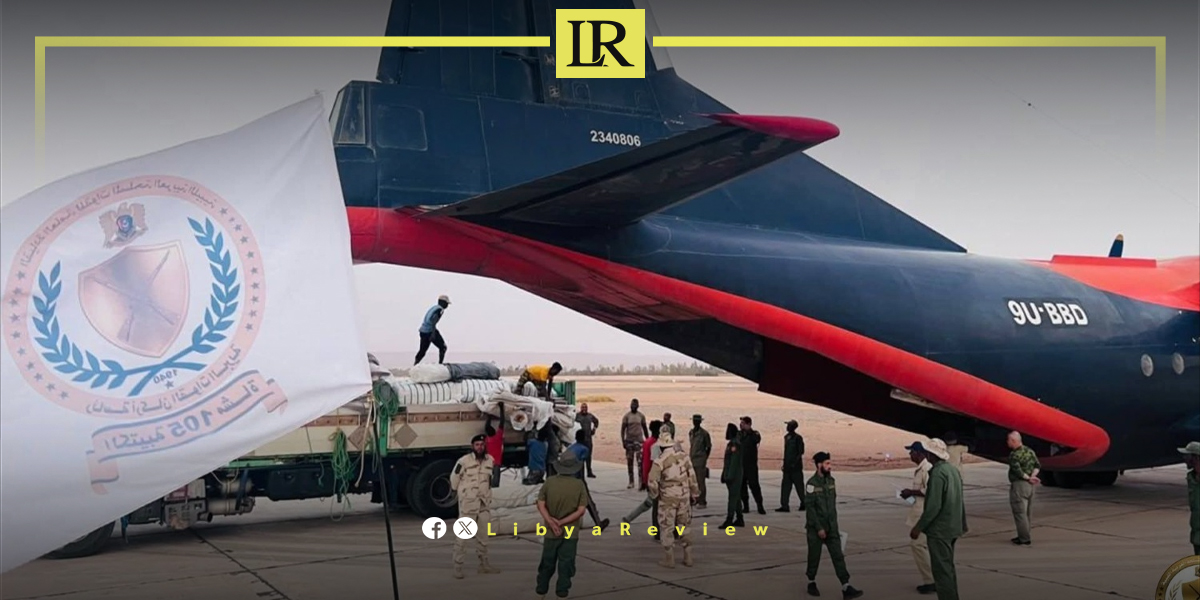
Humanitarian aid shipments have arrived in southern Libya to support communities affected by recent floods and severe weather, following directives from Libyan Army General Khalifa Haftar and under the direct supervision of deputy commander-in-Chief Lieutenant General Saddam Haftar.
Aircraft carrying relief supplies landed at Ubari Airport as part of an emergency operation designed to support communities impacted by recent storms, flooding, and overflowing valleys across the south of the country. The shipments included essential humanitarian assistance intended for families affected by property damage, displacement, and disruptions to daily life caused by the severe weather.
The aid was received by the 105th Infantry Battalion, which has been tasked with transporting and distributing supplies to municipalities and communities affected by the flooding. Relief efforts are expected to cover several areas, including Ghat, Tehala, Essin, Al-Awainat, and other locations that experienced significant damage following days of heavy rainfall.
Officials said the operation forms part of broader humanitarian efforts aimed at providing immediate support to affected residents, meeting urgent needs, and helping communities recover from the impact of the floods. The assistance is also intended to ensure that essential supplies reach remote areas as quickly as possible despite difficult conditions on the ground.
Southern Libya has witnessed severe weather in recent days, with heavy rain causing flash floods, damage to infrastructure, road closures, and the displacement of several families.
Local authorities and emergency teams have remained on alert as weather forecasts continue to warn of unstable conditions in parts of the region.
The latest response highlights the importance of coordination between military units, local authorities, and humanitarian organizations in addressing emergencies and delivering aid to vulnerable communities.
Officials stressed that relief operations will continue as damage assessments are completed and additional needs are identified.

