
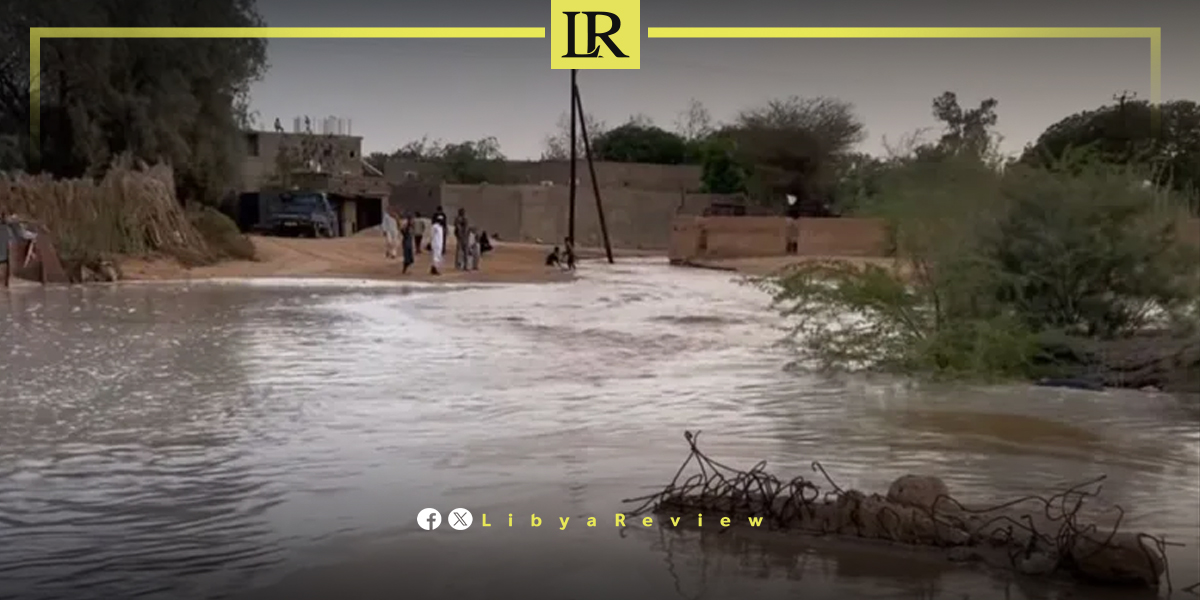
Severe flooding in southern Libya has caused a major disruption to telecommunications and internet services, leaving the cities of Ghat and Tehala largely disconnected after powerful floodwaters damaged critical communications infrastructure.
The outage occurred after heavy rainfall and overflowing valleys swept through areas linking the two cities, causing extensive damage to the region’s fiber-optic network. Local authorities reported that multiple breaks were recorded along the main communications cable, resulting in a complete interruption of telecommunications and internet services across the affected areas.
The disruption has added to the challenges already facing residents as communities continue to deal with the aftermath of severe weather that has affected large parts of southern Libya in recent days. Floodwaters have damaged roads, disrupted transportation routes, and forced several families to leave their homes, while emergency teams continue to assess the full extent of the damage.
Technical teams from Libya Telecom began repair operations shortly after the damage was reported. Despite difficult terrain, damaged infrastructure, and unstable weather conditions, maintenance crews have continued working to restore services as quickly as possible. Officials expressed hope that communications and internet connectivity will return once repairs to the fiber-optic network are completed.
The communications blackout has raised concerns about the impact on emergency response operations, coordination efforts, and access to essential services in affected communities. Reliable telecommunications remain critical for humanitarian agencies, local authorities, and residents seeking assistance during emergencies.
In response to the flooding, outgoing GNU Prime Minister Abdel-Hamid Dbaiba directed government institutions to accelerate relief and recovery efforts. Authorities have been instructed to provide humanitarian assistance, support displaced families, deploy emergency medical teams, and mobilize resources to remove accumulated floodwater from residential areas.
Repeated flooding has exposed weaknesses in telecommunications networks, transportation systems, and public utilities, increasing calls for long-term investment in infrastructure resilience and disaster preparedness.

