
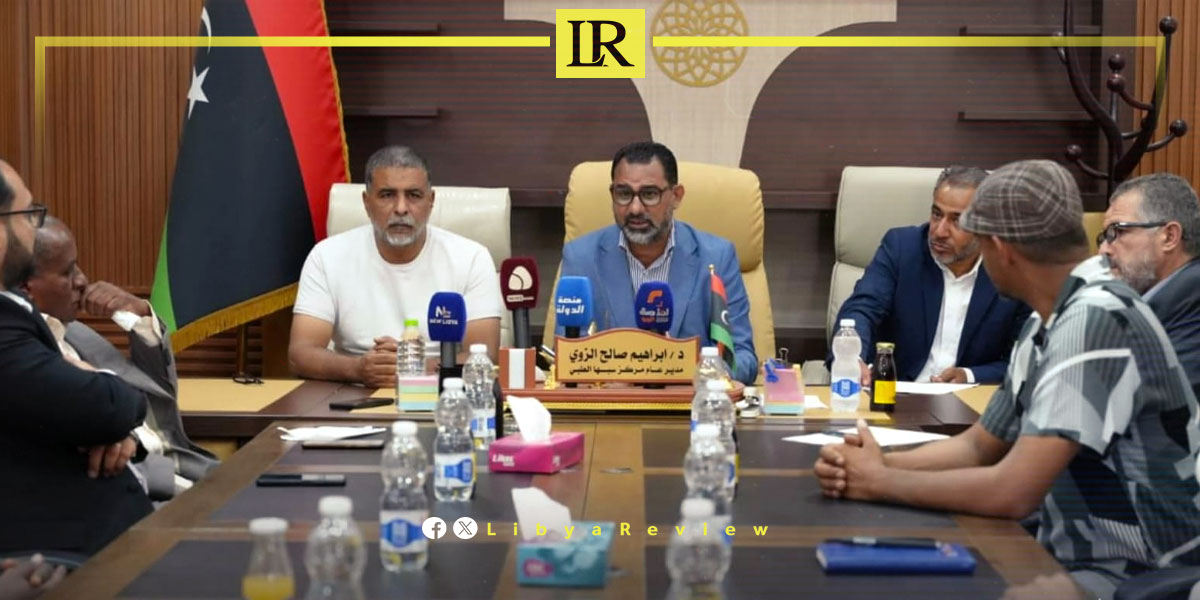
Libya’s Ministry of Health has launched 16 specialist diploma programmes in the southern city of Sabha as part of efforts to strengthen medical training and address shortages in healthcare professionals across the country’s southern region.
According to the Libyan News Agency, the programmes aim to improve professional qualifications and enhance the skills of healthcare workers while helping medical facilities meet growing demand for specialised expertise.
The initiative forms part of the ministry’s broader strategy to develop human resources in the health sector and improve the quality of healthcare services in southern Libya.
Officials said the programmes also support government plans and the broader Vision 2030 framework promoted by the eastern-based leadership, which seeks to establish a modern and sustainable healthcare system capable of meeting future challenges and delivering higher-quality medical services.
The diploma programmes were officially launched during a meeting organised by the Medical Workforce Development Centre of the Ministry of Health.
The meeting was chaired by Jamal Al-Maghrabi, Director of the centre, and attended by Jamal Abdul Salam, Director General of the Sabha branch of the centre, as well as Khaled Al-Sharif, Chairman of the Emergency Committee for the South-Western Region.
Hospital directors, healthcare facility managers and officials from various departments across southern Libya also participated in the meeting.
Al-Maghrabi said the programmes are designed to enhance professional and specialist training in accordance with the actual needs of healthcare institutions across the country.
He described southern Libya as a priority area within the ministry’s development plans, noting that improving the skills of healthcare workers would strengthen the readiness of hospitals and medical centres while supporting wider health sector development.
According to ministry officials, the diplomas were developed following a comprehensive assessment of training requirements within healthcare facilities and cover a wide range of medical and technical disciplines.
Additional programmes are expected to be introduced in the coming period, including a specialised diploma in physiotherapy.
The ministry said the initiative reflects broader efforts to localise medical training and improve the long-term sustainability of healthcare services across Libya through investment in human capital and professional development.

