
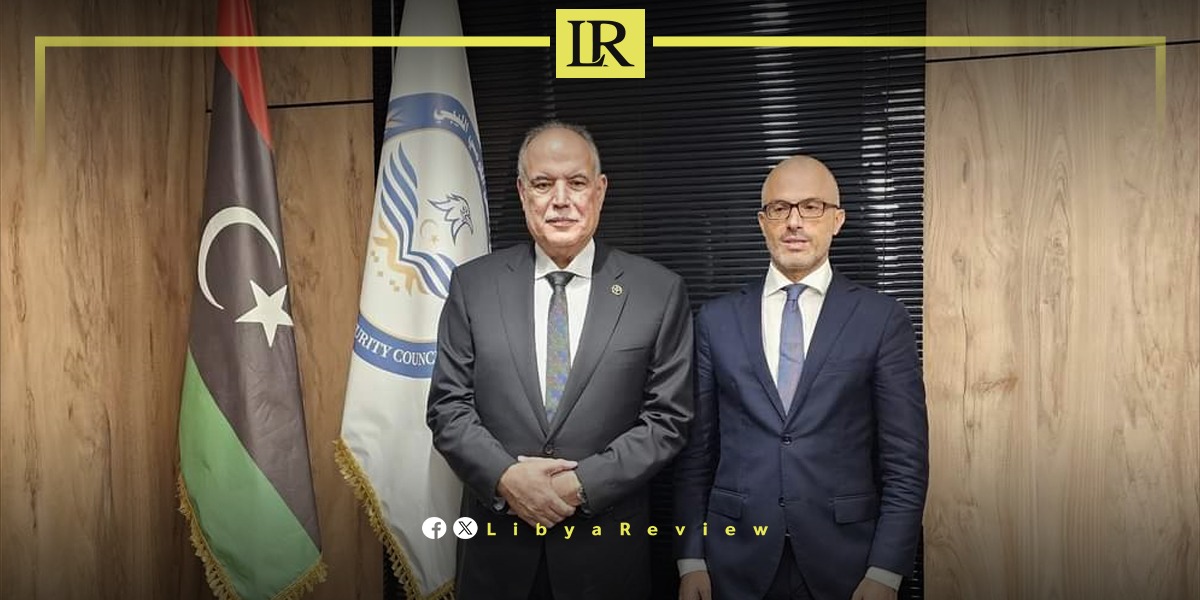
On Wednesday, Libyan National Security Advisor Ibrahim Bushnaf met with the European Union (EU) Ambassador to Libya, Nicola Orlando, and his delegation at the Council Office in Benghazi. The meeting focused on the latest developments in Libya and strategies for resolving the ongoing crisis.
During their discussions, the parties explored ways to advance the political process in Libya, aiming to establish a unified government that would pave the way for presidential and parliamentary elections.
Ambassador Orlando described his meeting with Bushnaf as productive and effective, emphasizing the importance of addressing the current national, regional, and international dynamics impacting Libya.
Libya has been in turmoil since the fall of Muammar Gaddafi’s regime in 2011, experiencing prolonged political instability and violence. The fragmented political landscape, with multiple governments claiming legitimacy, has hindered efforts to achieve lasting peace and stability.
The international community, including the European Union, has been actively involved in efforts to stabilize Libya. The EU supports initiatives that foster dialogue among Libyan factions, promote political reconciliation, and establish a unified government capable of leading the country towards democratic elections.
The meeting between Bushnaf and Orlando underscores the EU’s continued commitment to supporting Libya. Discussions highlighted the need for a comprehensive political solution that includes all Libyan stakeholders and addresses the root causes of the crisis.
Establishing a unified government is seen as a critical step towards ending the crisis in Libya. A cohesive political structure would facilitate the organization of presidential and parliamentary elections, allowing Libyans to choose their leaders democratically.
As Libya moves forward, the focus will remain on implementing effective political solutions, ensuring security, and fostering economic development. The EU’s commitment to supporting Libya in these efforts is a testament to the importance of international solidarity in resolving complex crises.
With continued engagement and support, there is hope that Libya can achieve the stability and unity necessary for a successful transition to democracy and sustained development.

