
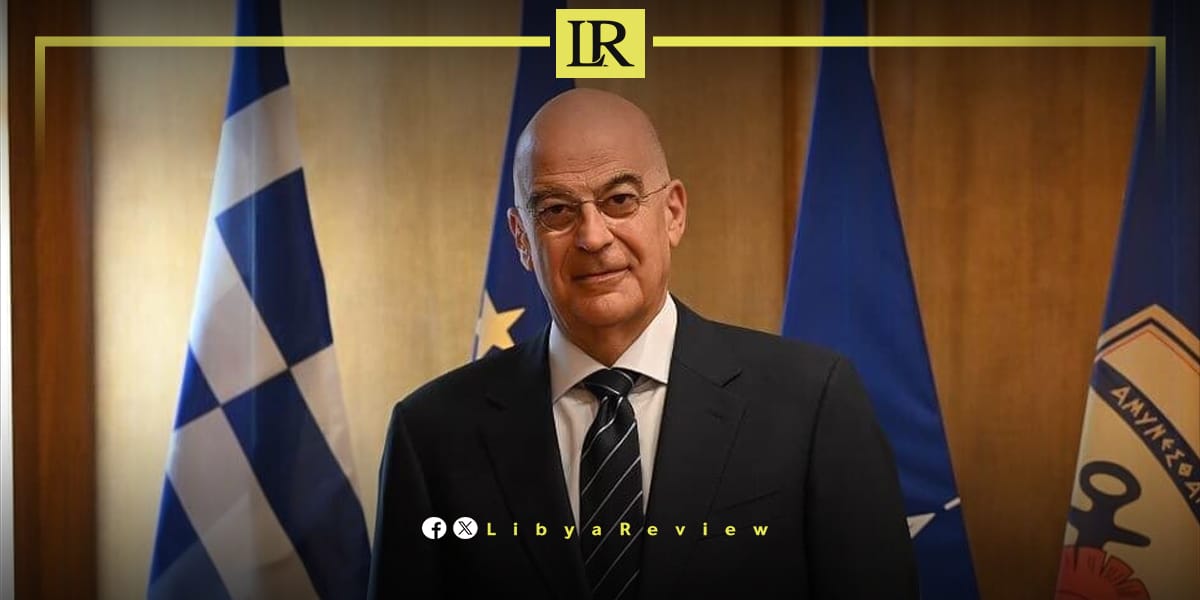
Greece has intensified its criticism of the 2019 Turkey–Libya maritime memorandum, with Greek Defence Minister Nikos Dendias describing the deal as “legally non-existent and entirely outside both law and logic.” His remarks placed Libya once again at the centre of Athens’ diplomatic messaging, as tensions persist over maritime boundaries in the Eastern Mediterranean.
Speaking in Athens at an event marking the anniversary of the 1944 uprising and the liberation of Karpathos, Dendias reaffirmed that Greece will “never tolerate” any attempt to impose the terms of the Turkey–Libya agreement or to reinterpret maritime zones in a way that affects Greek islands, including the Dodecanese. He stressed that the memorandum has no legal standing and cannot override the rights established under international maritime law.
The minister contrasted the contested Libya–Turkey arrangement with Greece’s agreements with Egypt and Italy on the delimitation of exclusive economic zones. He described those deals—negotiated during his tenure as foreign minister—as “fully legal and exemplary,” adding that no Greek official has the authority to concede or dilute the rights enshrined in them.
Dendias also unveiled major components of Greece’s updated defence strategy, which carries implications for the broader Mediterranean security environment, including Libya. For the first time, primary responsibility for defending the Aegean will shift from naval forces to advanced long-range missile artillery systems deployed on both islands and the mainland. This change, he said, will free the navy’s newest assets to operate across the Eastern Mediterranean rather than being tied to constant patrol duties.
Among these assets is the Belharra-class frigate HS Kimon, which Greece is set to receive from France within days, alongside three more Belharras under construction and future Italian PPI/Bergamini-type frigates. Dendias referred to the emerging system as the “Achilles Shield,” a structure designed to bolster deterrence and enhance regional stability at a time when Libya’s maritime and geopolitical relevance remains high.

