
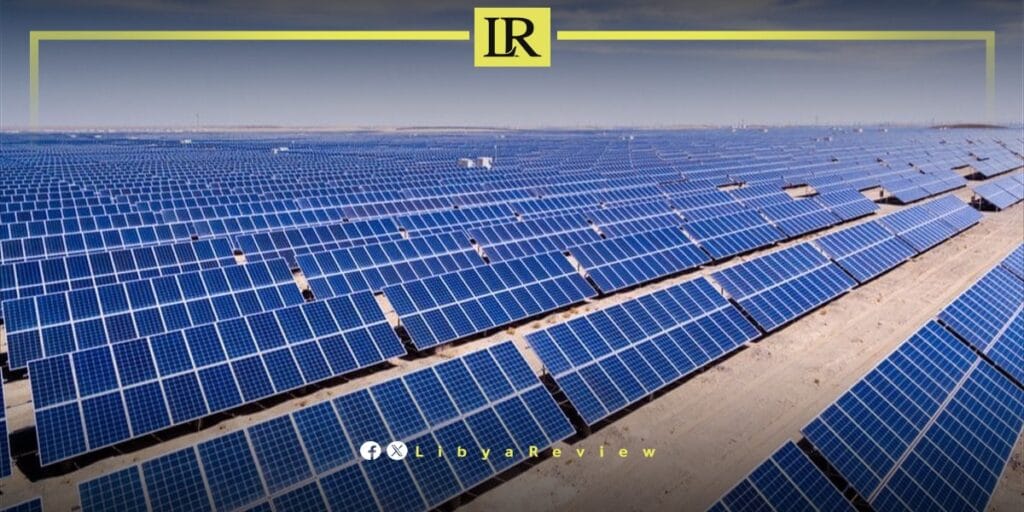
Libya has taken a significant step towards expanding its renewable energy capacity after the Ministry of Electricity and Renewable Energy in the Parliament-designate government signed an executive agreement with the Turkish company GECERT. The deal mandates the company to prepare detailed technical studies for the implementation of large-scale renewable energy projects across Libya.
The agreement was finalised during an extensive meeting on Sunday, following a field visit by the Libyan delegation to major industrial and power-generation sites in Turkey. The visit was part of an official programme arranged by a coalition of specialised Turkish companies, aiming to showcase the latest industrial technologies and explore avenues for joint investment.
According to Libyan officials, the agreement builds on a previous visit by a Turkish delegation to Benghazi, during which proposed projects were presented and preparations were made for an in-depth technical assessment. The latest meetings allowed the Libyan team to evaluate capabilities on the ground and to verify the readiness of Turkish partners to support Libya’s energy goals.
During the field tour, the Libyan delegation inspected advanced manufacturing facilities in Konya and Ankara, observing production lines for high-voltage transformers, solar panels, and next-generation battery systems. The factories rely heavily on automated and robotic technologies to maintain high quality and operational efficiency.
The officials also toured major renewable energy installations in Turkey, including large solar farms, wind-power stations, and biomass-gas plants. Special attention was given to hybrid stations that combine solar energy with biogas, implemented by leading industrial groups such as Europower, ESA Group, Pomega Lithium, and Kalyon Energy. Experts provided detailed technical briefings on smart-control systems, safety mechanisms, and integrated energy-production models.
Libya aims to benefit from these technologies to diversify its energy mix, reduce reliance on traditional fuels, and accelerate the development of modern renewable-energy infrastructure. The ministry said the partnership will provide a foundation for long-term cooperation and support national efforts to meet rising electricity demand through sustainable solutions.

